Breakfast on the beach again. Another scorcher of a morning. My toes are showing wear: blisters from jandals and Tevas are making it increasingly difficult to walk.
We had to be off the island at 2:00 to take Katrina to Nelson. Crossing at high tide was a test of strength and endurance. What appeared to be a gentle flow into an estuary was, in fact, a very fierce flow into an estuary. Katrina and Susanne loaded up the sea kayaks with emtpy LPG bottles, rubbish, laundry, and all of our gear. Katrina and I were to row to the other side with all the gear, then I had to row back to get Ami. Simple, no? It seemed easy enough on the way over, but kayaking back alone was downright frightening. I paddled until my shoulders burned, but for a moment it did nothing more than keep me in the same place--the outgoing tide sweeping through the small channel was very adamant that I be swept out to sea. I feel like I just made it. Kayaking back with Ami, I let her do all the work.
19 February 2007


15 Feb--Notes from a Travel Journal, pt. 4
Jesus Christ, it's hot this morning. We eat breakfast and drink coffee in the morning sun. Katrina and her sister, Susanne, talk between bursts of bickering and song.
Late morning, we scatter--each finding a place to read. I hang in the hammocks among the pine, while Ami sits in the beach grass reading about the history of the Middle East. We only join up again when it is time to eat and drink.
Clouds come, and with them a slight rain. I fall asleep listening as it settles into the trees. When I awake, it is time to eat again.
Late morning, we scatter--each finding a place to read. I hang in the hammocks among the pine, while Ami sits in the beach grass reading about the history of the Middle East. We only join up again when it is time to eat and drink.
Clouds come, and with them a slight rain. I fall asleep listening as it settles into the trees. When I awake, it is time to eat again.
16 February 2007
14 Feb--Notes from a Travel Journal, pt. 3

Awoke to dawn chorus as I have every day on the trip. Fell back to sleep soon after its conclusion, re-awakening some hours later to pack up the tent.
Walked part of the Abel Tasman. It took 1.5 hours to walk to Appletree Bay where we swam and lay in the sun for another 1.5 hours. Hiking out, we picked up people’s trash.
Have seen the following wildlife so far:
- Starfish—low tide in Marahau
- Crabs—same, and on Abel Tasman
- Eels—two of them as the tide came in, wetlands, Marahau
- Pukeko—Marahau, little Kaiteriteri
Spent some more time on little Kaiteriteri before meeting up with Katrina.
To get to Katrina’s island, we had to load up kayaks with groceries and row to Jackett island off the coast of Motueka.
The evening played out like a melodrama, or some dark comedy that I wish I had the wherewithal to write. Maybe soon.
Relieved that we have no place to go for the next three days. Isolated on this giant sandbar, the North Island on the horizon, I have to focus very hard to believe there is a world other than than the sand under my legs and the sea everywhere else.
13 February 2007
13 Feb--Notes from a Travel Journal, pt. 2

Day 2
note: getting dark and more difficult to write.
- drove out of Okiwi toward Nelson and met up with Auntie Katrina (Ami's "aunt." more of a friend of Ami's mother, really). we'll stay on her island tomorrow, but today we needed noting more than to lounge about on the beach. i've become an avid beach bum since leaving KS.
- drove to Kaiteriteri and swam around the rocks. absolutely puffed afterward. Ami is a much better swimmer and generally more fit. must, must, must do more exercise!
- drove on to Marahau and found a spot for the tent. tide was going out so we grabbed a couple of beers and walked out to the water. had to tip-toe as there were hundreds of starfish huddled in the small salty pools left by the outgoing tide. looking closer, tiny crabs, snails, and other creatures of which we don't know the names.
- Ami just arrived and told me to come look at the stars.
- A giant orange moon rises on the horizon, its reflection animated in the sea. in another part of the sky, comet mcnaught sails quietly out.
12 February 2007
12 Feb--Notes from a travel journal, pt. 1

Jamie and Ami spent a week moving between beaches in the northern South Island. What follows are notes from Jamie's journal.
Day 1
first of all, don't pack sleepy. after a mere 3 hour kip we tried to get up and pack at 5am. we managed to forget the following:
- coffee plunger
- cups
- gas stove
- spoons
- bowls
- deck chairs
A dinner of bread and hummus sitting on the beach, while nice, was bitter sweet knowing we'd be chewing coffee tomorrow morning and eating dry breakfast cereal.
- Camped at Okiwi Bay in the Rai Valley. A bit of a boatie community with most, if not all, of the residents avid fishermen (much overfishing is had by all). The camp site is quaint, but rocky and not good for those with tents . . . which is us.
- found a nice, private beach east along the road accessible at low tide. great for looking into shallow tide pools, tiny worlds shimmering away.
02 February 2007
1 Feb--A Day at the Races, pt.2

Horse racing boasts a long, sometimes dubious, never boring history. Across the globe, from the Kentucky Derby to the Melbourne Cup, there is one unifying element; one signature sight that has defined the track for generations: hats. The races would be little more than booze-laden gamblefests were it not for fancy hats. It's an undeniable fact, and one Jamie was all too aware of. Unfortunately, Jamie did not own a hat.
The panic set in early. Choosing the right suit was easy. He had a three-piece wool number he found at an op-shop (note to outsiders: "op-shop" is Kiwi for thrift store) a couple of years ago that set him back a mere $15. But it would all fall short if he was unable to tie it together.
Luckily, Wellington had a hatter. Not a hat shop or a clothing store with hats--a proper hatter complete with the little machine that stretches hats for the perfect fit. He had been inside for less than a minute when he saw it: on a high shelf, atop myriad versions of itself--his hat. It had to be.
"You after the 'pork pie,' mate?" called the hatter.
He even liked the name.
01 February 2007
31 Jan--A Day at the Races, pt. 1
What a crummy week, Jamie thinks. And it was only Wednesday. He raises his hand to the bridge of his nose and squeezes hard--a small pinch to distract him from pressures elsewhere.
"I need a distraction," he says outloud. His fellow Web designers peek over their monitors.
"I could sing a song," Liam offers, and proceeds to belt out a few bars of Maneater.
"No, I mean I need a REAL distraction, like what beer does for you." Jamie said, and as soon as the words were out of his mouth, an email from Ami arrived in his inbox.
Just received two tickets to the Wellington Classic. Free booze, free food--fancy a day at the races?
Jamie smiles. That's more like it.
"I need a distraction," he says outloud. His fellow Web designers peek over their monitors.
"I could sing a song," Liam offers, and proceeds to belt out a few bars of Maneater.
"No, I mean I need a REAL distraction, like what beer does for you." Jamie said, and as soon as the words were out of his mouth, an email from Ami arrived in his inbox.
Just received two tickets to the Wellington Classic. Free booze, free food--fancy a day at the races?
Jamie smiles. That's more like it.
30 January 2007
29 Jan--Jamie and his terrible, horrible, no good, very bad day
The day had been challenging enough without forgetting the house alarm code, Jamie thought. But there he was, standing perfectly still, hoping the breeze blowing in wouldn't trip the motion sensors. With his fingers hovering over the keypad (3425? 2543?), he quietly remembered how long his day had been, beginning with leaving his mobile on his bedside table.
Then Ami decided she would take the car to work. Jamie wanted to take the car to work. "No," Ami said, "You can take the train." Jamie stood on the platform and listened to the voice telling commuters that all the trains today would be delayed . . . indefinitely.
At work, a "very important project" landed on Jamie's desk. "We need these projects displayed as Gantt charts by 3pm. We heard you knew Photoshop." When middle managers and project managers say "Photoshop," they mean "miracle-working." They continued, "We saw someone do it once in PowerPoint, but we need to print this out and have it take up the whole wall." No matter how many times Jamie explained the concept of bitmaps and pixels and their relative inflexibility, they wouldn't budge.
Jamie had to work through lunch. By the end of the day, a knot the size of a lemon had formed beneath his shoulder blade (on a side note, he now truly empathised with Ami).
Then Jamie couldn't find the right book for Ami's dad's birthday. The extra time he took going to a third bookstore made him late for his train home. He boarded the 6:00 and waited for it to pull out. After it had moved 500 meters, it stopped, and reversed back to the station. "We're sorry," the announcement apologised, "but all trains are delayed . . . indefinitely." Without a mobile, Jamie was forced to hunt down a pay phone. He found one tucked behind the station's pub, near the rubbish bins, but soon discovered it wouldn't take his credit card. He rummaged through his pocked and found some change. Ami didn't answer. She was at a going away party for a friend. Sitting in a loud bar, she never heard it ring. He left a message, but lost his change for it.
And now it was 8:00. He was standing in his hallway staring at the alarm's keypad, his mind a complete blank. He imagined he might be able to sneak, spy-like, into his room to recover his phone and thus ring Ami for the code, but realised he'd never make it. No--he was lucky to have walked this far without tripping the sensors. 1325? 2531? He leaned his head against the wall and wished he was on a beach in Australia.
Then Ami decided she would take the car to work. Jamie wanted to take the car to work. "No," Ami said, "You can take the train." Jamie stood on the platform and listened to the voice telling commuters that all the trains today would be delayed . . . indefinitely.
At work, a "very important project" landed on Jamie's desk. "We need these projects displayed as Gantt charts by 3pm. We heard you knew Photoshop." When middle managers and project managers say "Photoshop," they mean "miracle-working." They continued, "We saw someone do it once in PowerPoint, but we need to print this out and have it take up the whole wall." No matter how many times Jamie explained the concept of bitmaps and pixels and their relative inflexibility, they wouldn't budge.
Jamie had to work through lunch. By the end of the day, a knot the size of a lemon had formed beneath his shoulder blade (on a side note, he now truly empathised with Ami).
Then Jamie couldn't find the right book for Ami's dad's birthday. The extra time he took going to a third bookstore made him late for his train home. He boarded the 6:00 and waited for it to pull out. After it had moved 500 meters, it stopped, and reversed back to the station. "We're sorry," the announcement apologised, "but all trains are delayed . . . indefinitely." Without a mobile, Jamie was forced to hunt down a pay phone. He found one tucked behind the station's pub, near the rubbish bins, but soon discovered it wouldn't take his credit card. He rummaged through his pocked and found some change. Ami didn't answer. She was at a going away party for a friend. Sitting in a loud bar, she never heard it ring. He left a message, but lost his change for it.
And now it was 8:00. He was standing in his hallway staring at the alarm's keypad, his mind a complete blank. He imagined he might be able to sneak, spy-like, into his room to recover his phone and thus ring Ami for the code, but realised he'd never make it. No--he was lucky to have walked this far without tripping the sensors. 1325? 2531? He leaned his head against the wall and wished he was on a beach in Australia.
25 January 2007
24 Jan--We Lost a Friend
The Sand Castle
--for Chris
Fore and aft cannons: good idea. Defense
against the sea (then, you said, "the enemy")--
unpredictable, yes, but at least you see it coming.
With colour and a grin and a look like the look of a man
who's been there, you move earth as though you knew it.
Of course there is going to be a pool. A white spindle shell
too shy to mimic oceans, beer bottle forests. Planted
into your drawbridge one leaf of grass: not a thing
built for lifting, it's thin frame holds and with the tide remains
a buoyant, wholly remarkable life.
23 January 2007
20 Jan--So unfair; so natural
A day begins with the best intentions. Hour upon hour, however, it loses its grip and crumbles into night. As long as there is time there will never be enough.
19 January 2007
19 Jan--Carrying on the zombie thread . . .
If one is serious about the imminent threat of zombies (for those living in Kansas, I fear it may be too late. Seek shelter. Buy bullets. Steer clear of churches--they gather there.), one should begin by visiting this website.
18 January 2007
18 Jan--Wellington Streets, pt 5

. . . which is why Wellington employs the zombie death squad. Thanks, ZDS!
17 Jan--Wellington Streets, pt 4
 Few things are more unnerving than a zombie in undying pursuit. . .
16 January 2007
16 Jan--Wellington Streets, pt 3
 Sometimes Jamie finds himself shopping for miso and fresh tofu at an Asian food store when he is suddenly struck with the urge to hit a few balls at the driving range. Lucky for him, Wellington has just the spot.
15 Jan--Wellington Streets, pt.2
 Some images go beyond graffiti and become a prelude either to something remarkable or to something very, very silly.
14 January 2007
14 Jan--Wellington Streets, pt 1

To begin with, few are signposted. This seems to be a non issue for locals, yet for visitors and new arrivals, navigating Wellington is frustrating at best. Jamie is reminded of this as he sips a pint of Mac's Golden on the balcony of a central pub. Various backpack-laden people walk up and down the same street two or three times--they look down at the map, up to where a signpost SHOULD be, then, confused, back to the map. They appear to bounce from corner to corner like rats in the proverbial maze. He watches as they ask for directions, twice (hearing "oh, that restaurant is on the corner of Courtenay Place and Taranaki" means little when neither street makes itself known.)
Just to add to the fun of watching confused tourists, some streets have different names depending on which way traffic is flowing. One street (two?) that runs next to the now-famous Embassy theatre (site of the world premier of Lord of the Rings) is named Kent Terrace for traffic flowing south, and Cambridge Terrace for traffic flowing north. Jamie wishes someone would explain this to him.
On many occasions, after failing to find his destination, Jamie would simply wander up and down the streets taking snapshots of graffiti, advertisements, and stencil art spray-painted to the odd cornerstone.
One of his favourites is by a local artist named Otis Chamberlain. Chamberlain's work can be seen as stencil, graffiti, and, lately, on a drink ad. In the coming days, Jamie will notice and photograph other gems tucked into the concrete corners of the city.
13 Jan--An Observation
It soon occurs to Jamie that any inherent element of "cool" in a person is all but completely extinguished during the act of learning how to lasso.
13 January 2007
12 Jan--The Book of Cool
The Book of Cool is a combination book and DVD. Inside lies the mystery of being so chick-scoringly cool it is a wonder the price tag is a mere $54.95. Not that Jamie would pay to be cool, of course. No. Never.
He would, however, borrow the chance.
The Book of Cool demonstrates in colourful, documented steps how to perform acts of coolness in many disciplines including, but not limited to, skateboarding (ollies, heel flips), soccer (many juggling tricks), shuffling cards, spinning pens/pencils around one's fingers, mixing drinks, pool trick shots, Frisbee, roller blading, and juggling (Jamie knows from experience what a pull juggling can be at a party).
He sleepily flicks through the book; the DVD in its case, unopened. He indulges for a moment in the fantasy that if he should learn even one cool point, he would invite himself to as many parties as he possibly could. He stops flicking the book at the chapter on juggling and decides to begin here.
He looks at the page, and a photo of a man throwing chainsaws into the air looks back.
"Cool." Jamie observes, and he begins.
The first sentence of the chapter reads, "Mad Chad is a professional juggler . . . You are NOT Mad Chad."
Here Jamie stops. The blunt truthfulness of this sentence smacks him in the face. Who am I kidding, he thinks? I've never been cool--beginning now would be pouring lemon juice on the wound.
He flicks quickly through the book with the intention of closing it when he notices a different chapter.
"What's this?" Jamie says, noticing the heading of the chapter. It reads, Lassoing.
"Much better," He says out loud and races down to the garage to find the nylon rope. "There might just be cool in me yet."
He would, however, borrow the chance.
The Book of Cool demonstrates in colourful, documented steps how to perform acts of coolness in many disciplines including, but not limited to, skateboarding (ollies, heel flips), soccer (many juggling tricks), shuffling cards, spinning pens/pencils around one's fingers, mixing drinks, pool trick shots, Frisbee, roller blading, and juggling (Jamie knows from experience what a pull juggling can be at a party).
He sleepily flicks through the book; the DVD in its case, unopened. He indulges for a moment in the fantasy that if he should learn even one cool point, he would invite himself to as many parties as he possibly could. He stops flicking the book at the chapter on juggling and decides to begin here.
He looks at the page, and a photo of a man throwing chainsaws into the air looks back.
"Cool." Jamie observes, and he begins.
The first sentence of the chapter reads, "Mad Chad is a professional juggler . . . You are NOT Mad Chad."
Here Jamie stops. The blunt truthfulness of this sentence smacks him in the face. Who am I kidding, he thinks? I've never been cool--beginning now would be pouring lemon juice on the wound.
He flicks quickly through the book with the intention of closing it when he notices a different chapter.
"What's this?" Jamie says, noticing the heading of the chapter. It reads, Lassoing.
"Much better," He says out loud and races down to the garage to find the nylon rope. "There might just be cool in me yet."
11 January 2007
11 Jan--Senior's Menu

Darrell, Karen, and Peter (Jamie's father, mother, and brother respectively) are moving to Dunedin. Their initial efforts to find a house were fruitless, but their luck changed yesterday when they found a place in St. Clair that boasted views of both the city and the sea. It could hardly get any better.
The three of them decided to eat out in celebration, understandably. Choosing Cobb & Co. (New Zealand's version of The Black Eyed Pea or Chilis or Ruby Tuesday or Amarillo Grill or any theme-oriented, family-friendly, mass produced franchise restaurant) was more a result of Peter's insatiable desire for cheese-laden meat food than a desire to find a nice meal. While perusing the menu, the waitress approached the table and rattled off a few specials, most of which fell into the cheesy meat, or meaty pasta.
"And the fish of the day is blue cod," she chipper, youthful tone.
"Blue cod," Karen thought, biting her tongue, "how . . . special."
The waitress began to walk away, but suddenly spun on her heel as if she'd forgotten to tell them something, which she had. She reached over Darrell's shoulder and pointed to the menu in his hand. "Oh, and the senior's menu on page three. It's there for people 55 and over, so you might want to think about that."
Darrell was ropable. With each shade of red his face darkened, Karen laughed harder.
"What the hell did she say to me? Senior's menu?!" Darrell whispered loudly.
"Look," Karen offered, wiping the tears from her face, "most of the items come with a straw!"
They hooted and howled, forgetting for a moment the move, their quest for a house, even their surroundings. It was good to laugh again.
08 January 2007
8 Jan -- Peter and the Sundial of Human Involvement
.jpg)
Peter Love regards the world with what is best described as sincere honesty. He gives every situation the benefit of the doubt, whether it be a conversation or a television commercial (indeed, he will sometimes comment in all seriousness on our need to investigate the possibility of buying new carpet after witnessing with what ease red wine is lifted from a StainMaster brand rug on TV). Peter will strip away cynicism and clever marketing and regard a message in its own dumb nakedness. Sarcasm, far from being misunderstood, is simply ignored. This is illustrated no better than in the case of Peter and the Sundial of Human Involvement.
In the leafy centre of Wellington's Botanical Gardens there sits the Sundial in question. A sign invites passers by to stand in the middle, thrust one's arms into the air, and create a human sundial. Most participants who do so enjoy a laugh or a bit of self-deprecating humour. Peter, however, carefully read the instructions and stepped into the sun.
"It says you need to stand on today's date, Pete." John, Peter's brother, shouted as he read further. On the ground was a figure-eight in stone with various calendar dates. For the dial to work, the person needed to be on the correct day to take into account the tilt of the earth.
"Today's date isn't here." Peter replied, pointing to the evidence.
"Well, I guess you'll just have to get close." John replied.
"Hardly accurate." Peter shot back.
Never one to let an obstacle like the existence of a day stop him, Peter places his hands together and raised them over his head. His body was straight and motionless, for a moment you could almost see the shadow moving slyly across the number's face.
"What time is it?" Jamie asked. His question was met with silence as Peter interpreted his position.
"2:20." Peter said firmly.
Jamie looked at his watch.
"Nope. It's a quarter-to-three." He said.
"That's a shame." Peter replied, his arms flopping to his side. "It was such a good idea. This really could have caught on."
07 January 2007
7 Jan--A quick reflection on the weekend

Jamie's friend Scot got married to Holly (Ami, Jamie's partner, is Holly's sister) on Saturday, and Jamie was lucky enough to be invited to the wedding. Despite the pastor's waffling incoherently and completely misinterpreting the story of the Wedding at Caana (My take: Jesus didn't turn water into wine. Let's be serious for a moment--the bartender was holding back, telling everyone there was no more so they wouldn't get into his good stash. When he heard that some fella was going to pour water into his casks, he quickly brought them to the surface. Oh! A miracle! We DO have wine!), the wedding was a lovely one. More importantly, though, the reception was legendary. As soon as Jamie sees the photos, he'll be able to remember what happened. Until then, he'll have to live with the colourful events that zip briefly through his memory: Champagne on the beach, a meatball, potatoes roasted by babies, shouting his lungs out to Bon Jovi covers, why is there chalk in my mouth?, the congo line through Michelle's kitchen while the B-52's blared on a hijacked stereo . . . on second thought, Jamie may not need the pictures after all.
Congratulations Holly and Scot.
03 January 2007
Returning to work, Jamie finds his desk exactly as he left it: a music magazine lay flat next to a small shelf of Web Design books, site navigation maps are tucked underneath his phone, a wind-up alarm clock with Chairman Mao painted on the face sits silently near his monitor. Although it has been a mere ten days since he left, he walked in thinking something would be different, but nothing is. The calendar on the wall still displays December 2006. In the corner a tired, plastic Christmas tree leans against the wall, its pipe-cleaner branches clinging defiantly to the garland. All the while the air conditioning haunts the room with a low, steady whisper. Soon the place will yawn to life: more people will shuffle to their desks, and keyboards will chatter under the electronic burble of telephones. Talk will be of the holidays: how they were spent and how they will spend the next one. Whatever transpired during the previous days is for most little more than a residue--it sits unused, waiting to be washed away.
Jamie, on the other hand, is more comfortable loitering about the long halls of his memory. Reflection is half the fun of living, he's decided. Over the next few days he will try to bring to light moments heavy with meaning, moments of impact, and moments of hopeless frivolity. The reader, he hopes, will not be able to tell the difference.
Jamie, on the other hand, is more comfortable loitering about the long halls of his memory. Reflection is half the fun of living, he's decided. Over the next few days he will try to bring to light moments heavy with meaning, moments of impact, and moments of hopeless frivolity. The reader, he hopes, will not be able to tell the difference.
24 December 2006
24 Dec
Christmas Eve in the Southern Hemisphere is, as you might expect, opposite that of the Northern Hemisphere--at lest weather-wise. Long days push blooms from various trees and shrubs, the summer solstice having just passed. Where in the Kansas evergreens are almost the only living plant to see, in New Zealand the landscape is alive with pohutukawa and calla lily. Barbecues float aloft scents of sausage and shrimp while the beach is crawling with great, lounging unwashed.
Funny, Jamie thinks, that so many of the Northern Hemisphere traditions are still held on to in the South Pacific. Take house lights for example. The multi-coloured, flashing spots bordering roof rims and window panes that, in Kansas anyway, are a warm sight in the long, cold nights, are out of place in a country where it's light until 10:00 and sees the sun rise at 5:00. Who besides late night revellers even lays eyes upon them? House lights are just one example of Christmas's place as a winter festival. On the darkest days of winter (for it falls very near the solstice), societies need a celebration to lift their spirits and bring each other physically and mentally closer together. A sort of half way point where a great deal of bother is made over heavy foods, spiced wine, and lots and lots of light. Christmas has surprisingly little to do with Christian tradition. Rather, it has a great deal vested in human bonding.
So why cling to roasts and layered casseroles in a region where it's 90 degrees Fahrenheit on a regular basis? For those in the North, imagine sitting down to baked ham, turkey, hot-cross buns, fruitcake, biscuits, chocolates, and heady red wine in the middle of July. Sorta makes you itch, doesn't it?
Slowly, however, it seems subsequent generations are shuffling off the coils of tradition and setting into motion an altered, more appropriate ceremony. Tradition is rooted in necessity; lose the necessity, and tradition is set afloat. How long it can keep its head above water is anybody's guess.
Funny, Jamie thinks, that so many of the Northern Hemisphere traditions are still held on to in the South Pacific. Take house lights for example. The multi-coloured, flashing spots bordering roof rims and window panes that, in Kansas anyway, are a warm sight in the long, cold nights, are out of place in a country where it's light until 10:00 and sees the sun rise at 5:00. Who besides late night revellers even lays eyes upon them? House lights are just one example of Christmas's place as a winter festival. On the darkest days of winter (for it falls very near the solstice), societies need a celebration to lift their spirits and bring each other physically and mentally closer together. A sort of half way point where a great deal of bother is made over heavy foods, spiced wine, and lots and lots of light. Christmas has surprisingly little to do with Christian tradition. Rather, it has a great deal vested in human bonding.
So why cling to roasts and layered casseroles in a region where it's 90 degrees Fahrenheit on a regular basis? For those in the North, imagine sitting down to baked ham, turkey, hot-cross buns, fruitcake, biscuits, chocolates, and heady red wine in the middle of July. Sorta makes you itch, doesn't it?
Slowly, however, it seems subsequent generations are shuffling off the coils of tradition and setting into motion an altered, more appropriate ceremony. Tradition is rooted in necessity; lose the necessity, and tradition is set afloat. How long it can keep its head above water is anybody's guess.
22 December 2006
21 Dec--Sport
One of the quirky beauties of living in a nation with the half the population of New York City is reading the sports page. Where national sports news in America is as predictable as reality TV, the sports section of the New Zealand Herald reads like the script of a David Lynch movie. The moment one believes one understands it, there suddenly appears on page 2 in-depth commentary on water polo. Yet unlike Twin Peaks, the diversion is refreshing, if not delightful. Jamie, never a fan of reading about sport, devours the spots page. He reads it as though he were an anthropologist poring over brittle texts depicting rituals of ancient civilizations--how familiar they are as a topic, but so foreign as a serious interest.
New Zealanders report on rugby and cricket with the same voracity as Americans report on gridiron and baseball. This us understandable as the former, although darkly understood in the States, are popular internationally. However, on the same page one may find articles on cross-country adventure/endurance racing, bicycling (both track racing and the Tour of Southland--New Zealand's answer to the Tour de France), netball, sailing, and numerous foot races (triathalons, mountain runs, etc). For Jamie, reading about sport has never been so enlightening.
New Zealanders report on rugby and cricket with the same voracity as Americans report on gridiron and baseball. This us understandable as the former, although darkly understood in the States, are popular internationally. However, on the same page one may find articles on cross-country adventure/endurance racing, bicycling (both track racing and the Tour of Southland--New Zealand's answer to the Tour de France), netball, sailing, and numerous foot races (triathalons, mountain runs, etc). For Jamie, reading about sport has never been so enlightening.
20 December 2006
20 Dec--On Revenge

What is revenge? As an emotion it can overshadow everything: fear, rejection, love--all are eclipsed. Revenge sets the mind alight, and all else is consumed. But why do we feel it at all?
Did it once serve a purpose? Was it beneficial? Life abhors wasted energy, and if there is one thing revenge consumes, it's energy. Leading to what? Retaliation. A specific action. Besides abhorring energy, life also tends toward homeostasis, the evenness of things. Revenge is retaliation against dissenters among the group. Revenge drives the body to act, to retaliate against the dissension. Retaliation leads to less dissension, which leads to a calmer group--homeostasis of small societies.
It had a purpose, once. These days it's all but wasted effort. Personal revenge does little more than quench the raw emotion. The greater societal benefits are lost as the boundaries of the proverbial group expand, growing ever wider until revenge itself becomes the norm, and we retaliate only by staying calm.
So can revenge in contemporary societies still be realized? Well, access to the internet helps.
19 December 2006
19 Dec--Take this, JF
 There comes a time in every man's life when he has to stop leaning against the wall when using the urinal, and just pee standing up straight. Many months ago Jamie did just this and was surprised, to put it mildly, to see his sister's name scrawled into the wood. How is it, Jamie thinks, that even when she's a trillion miles away, Libby still manages to win.
15 December 2006
15 Dec--On Home

Jamie once referred to home as "what we sacrifice." It made sense at the time--he spent 24 years growing up in Wichita, his family always near. Then one year everyone left. One sister went to Newton, one to Australia (then Canada); one brother moved to California, the other to New Zealand with his parents. Jamie flew to Ireland. And there, in a land of poets, of people so rooted to a place that generations of New Yorkers still call it the homeland, Jamie reflected on what it meant to go home.
There are the obvious cliches: a hung hat, the heart; a place you go where they can't turn you away. There are the traditionalists who, like the Irish or the pagans of ancient Rome, are tied to a region as large as a continent or as particular as one's own neighbourhood. Yet there are only two constants when referring to "home": 1. You know when you are there, and 2. You will, eventually, leave.
The first point is rather vague. It's like determining art from not art. One might describe home as a "sense of belonging," but elaborate--what is a sense of belonging? How does one know when one belongs? And then how does one quantify a sense of this? Furthermore, that sensation is different depending on to whom you're talking. A Congolese refugee may not have the same attitudes toward home as a young girl who suffered abuse there. In both of these cases the individuals were forced to sacrifice their homes--the former being physically removed, and the latter stripped of home's general warmth and comfort before she had a chance to experience it.
But we all leave home--everyone, everywhere--eventually. Whether by force or by choice, we will leave it. Home becomes a sacrifice we share, individually if not collectively. It could be likened to the womb: where we are protected; where we are important. Returning home, be it a physical structure or among a group, is in some way returning to a manifestation of maternal care: like when you were six years old and were scared of the dark, you ran to mother--your first home, your only home.
15 Dec

It has been one week since Jamie's father came to visit. Jamie hopes he is doing well, and he wishes his little brother, Peter, a very happy birthday.
12 December 2006
12 Dec

Some days you have life cornered. You're eating lunch with friends on a sunny afternoon, sipping beer and watching the world shuffle about. Things are simple. Everything makes sense.
Then a man walks accross the street pushing a pram carrying a dwarf with a ghetto blaster on his lap, and life gives you a reality wedgie--stuff's happening. Wake up.
11 December 2006
11 Dec--FAQs
Taken out of context, Frequently Asked Questions can be quite amusing. Jamie spent a lazy afternoon gathering a few.
- What's an agent?
- Is tic-tac-toe solved?
- Why are so few games released for acorns?
- What's this Information Theory thing?
- How many pictures will fit in my memory?
- What should I worry about when buying from a lowest-cost online dealer?
- Where can I get beer?
- What's all this about Cloves?
- What is a troll?
- How and with what do I polish leather?
- How can I protect my ideas?
- I'm new, what should I do now?
08 December 2006

06 December 2006
6 Dec--On bones

They shine at 35, a veritable summer solstice of bone mass. After which point they decline, wither into dusk and the impending winter. Bones are not built to last. And it doesn't help that the very DNA that creates them also breaks them down. Unlike Rilke's angels who "serenely disdain to annihilate us," a chemical in our DNA decimates without hesitation. Year after year, we wear the scars (wrinkles, poor eyesight) as our body slowly eats itself. Without this chemical, however, could bones forever support us?
A forensic anthropologist can identify your age, sex, and (sometimes) your race just by observing signature bones. American Indians carry a unique gene that produces an extra ridge on the tongue-side of some of their teeth; hip bones of adult women are wider and have a more pronounced curve around the ishio pubis. Osteoporosis, polio, bad diet: all can be gleaned from as little as a mandible. If our living faces are televisions broadcasting our interpretation of the world right now, then our bones are time capsules: calcified sponges of facts into which we encode messages--indicators of who we were and how we lived--for the future. Not quite as quick or Wellsian as sending yourself a decade-delayed email, but enough to say "I was an 18-year-old, American Indian woman"; "I survived another trepanning"; "I drank too much Coke." Bones mumble on to whomever listens until, patiently, they turn to stone; their voices reduced: eerie truths whispered among the clamour of flesh. They linger like picture frames sold on the side of the road: the painting gone, the skeleton appears naked and new, catching the light like teeth petrified and smiling.
04 December 2006
4 Dec--On Imagination

One thing is for sure, it would make a good riddle--some stone-toothed whisper from the Sphinx; perhaps chanted in the Oracle's low tones--or a crumb of Zen wisdom dizzying in its circular logic. It makes us human and makes us anything.
In literary circles one finds it dressed up in the guise of Personal Narrative: the stories inside which we frame our existence. We imagine ourselves as forgiving, understanding, attractive. pathetic, thin, fat, tough, happy. We go further and weave a glistening web spun from spools of history, religion, and family. We say, "I am Scottish. We're from the highlands" even when home is America's Great Plains. In this case we are imagining our lives in the context of a whole, where the group in question is family as far down the tree as we can climb with certainty. Understandable when familial links are easily found. More difficult for those orphaned at birth, refugees--those for whom even the concept of home is wholly alien.
Everyone uses it but nobody uses it the same.
In his book The Culture of Make Believe, author Derrick Jensen provides a framework for the notion that Society is little more than a collective imagination, and that the current Western ideals of relationships, crime, and salary expectations are desperately reinforced by other elements of the same culture: television, movies, and print media. As participants in the body, we imagine ourselves fleshing out this skeleton. We emulate the actions of actors and aspire to hang on a model's arm. How we fit ourselves in, on the other hand, is unique to the individual. "Hate" and "love" are spoken freely in reference to a person whom we have never met, and probably never will--except in the context of personal imagination. You hate Julia Roberts. You love Penelope Cruz. You (probably) don't know either, but you can see both women's faces when you read their names. But what about Urmila Matondkar or Mallika Sherawat? As far as you're concerned, they don't exist; and as far as they're concerned, neither do you.
We need it to create our world, but the world would be there without it.
In any given day one can expect the existence of one or more of the following: puppy-shaped clouds, a first kiss, you stole the remote, rainbows, reindeer, Rainer Maria Rilke's Duino Elegies; you can bet somewhere there is some sex, or at least the thought of it. And then earth moves, I remembered the song she used to sing me to sleep, a dream involving cattle, flying pigs, queueing up for tickets, dragons in the kitchen, a hailstorm of heaven-sent scimitars, I'm sure she'll call, I'll never make it, I was there all along, you lied, you never meant it, what did I say?, what is it we were talking about?
Imagine a world without it--a good riddle.
03 December 2006

30 November 2006
30 Nov--If the Intranet is a party, Jamie just crashed it
It was supposed to be simple: bury a folder deep in the department's (the government department for whom Jamie contracts, but who must remain anonymous) portal to test a few web pages he built for another client. Sure, it was a little sneaky, and there was a slight echo of subversion ringing in Jamie's ears as he created the new folder (he liked it. It reminded him of any given day between the ages of 8 and 18).
At the last minute, however, he decided against it. Not that he was chickening out, he just realised he knew of a better, more secret, more subversive place to hide the files. So he deleted the folder he'd just made, and was surprised to see a confirmation message pop up. "Are you sure you want to delete this folder and all its contents?" It asked.
"Strange," Jamie thought. "I didn't put anything in the folder. Must be a standard message." And just as he lifted his index finger from the mouse, releasing the left-click and with it the "Yes" button, he caught a brief glimpse of the folder highlighted on the screen: RootDAV.
RootDAV is the agency's server; the Intranet; the Portal. It is the hub of all intra-office affairs. Home of phone numbers and funding procedures, profiles and application forms. And Jamie had just deleted it.
It was 4:45pm. Much of the IT staff had left for the day. He looked over his shoulder to check if anyone had seen what just happened. But since Jamie sat in front of a window, the gesture was no more than thoughtless reaction. He decided to try opening a few pages in the broswer. The error message that flashed before him was so unlike any he'd ever seen, it actually frightened him. This was not a "page not found," or "try opening this file again." Before him were the words, "This Server is not responding. Please contact the Webmaster for support." The word "Webmaster" was a hyperlink, and therein was some assurance. Jamie pointed his mouse to click the link but stopped.
"Shit. I'M the Webmaster."
It was now 4:48pm. Jamie received three successive emails: Can't download . . . can't log on . . . Intranet seems to be down.
4:49: the phone rings. Jamie quietly reassures the gentleman that everything is normal. "Just a routine fix. It'll be back up in no time."
"Who was that?" Liam asked, looking over the top of his monitor at Jamie.
"Oh, nobody. Hey, will you open the portal home page for me?" Jamie asked.
"Sure." There was a brief pause. " . . . wait . . . no. I can't."
"Damn." Jamie said.
"Um . . . what'd you do?" Liam asked slowly.
"Remember the Intranet?"
"What do you mean 'remember?'" Liam was more serious now.
"Well, I sorta deleted it."
"You deleted the server?"
"Shhh! For Christ's sake! Do you want people to find out?!" Immediately after he said it, he realised how ridiculous it was. But something inside him told Jamie to stay calm because something else inside him--and Liam--was trying to get out: panic. So both of them sat and looked at the error message for a few more minutes as if it was going to reveal some deeper message.
It didn't.
"James?"
"Yeah."
"You know HR processes everyone's salary on the portal?" Liam asked without moving.
"No kidding? That's dumb. Cause I just crashed it." Jamie replied honestly. "When do they do that?"
"Today."
"Oh. What time?"
"5pm." Liam answered.
it was 4:55. And then Liam and Jamie were struck with the same thought at the same time. But before they could go get drunk, the had to fix the server.
"Damnit. What's the quickest, dirtiest way to fix this?" Jamie was impatient. A quality he inherited from his mother.
"Well, I guess we could just reboot it, but there's no guarantee it will all be in order. Plus, the whole server will be down for 5 minutes while it restarts." Liam explained.
"Liam," Jamie said patiently, "the server is GONE! What's 5 minutes?"
"Oh yeah. Good point. Shall we?"
"Let's." It struck Jamie how nonchalont the two of them were behaving considering nobody in the organisation was going to get paid, and blame would fall on both of them. Liam and Jamie spent the next 5 minutes on Job Search websites. Jamie was just about to submit his resume when he saw Liam thrust his arms into the air.
"It's up!' It's up!"
"Sweet," Jamie said. "Let's go to the pub before people figure out what happened." Jamie grabbed his bag and was out the door. Bringing down an entire government network is thirsty business.
At the last minute, however, he decided against it. Not that he was chickening out, he just realised he knew of a better, more secret, more subversive place to hide the files. So he deleted the folder he'd just made, and was surprised to see a confirmation message pop up. "Are you sure you want to delete this folder and all its contents?" It asked.
"Strange," Jamie thought. "I didn't put anything in the folder. Must be a standard message." And just as he lifted his index finger from the mouse, releasing the left-click and with it the "Yes" button, he caught a brief glimpse of the folder highlighted on the screen: RootDAV.
RootDAV is the agency's server; the Intranet; the Portal. It is the hub of all intra-office affairs. Home of phone numbers and funding procedures, profiles and application forms. And Jamie had just deleted it.
It was 4:45pm. Much of the IT staff had left for the day. He looked over his shoulder to check if anyone had seen what just happened. But since Jamie sat in front of a window, the gesture was no more than thoughtless reaction. He decided to try opening a few pages in the broswer. The error message that flashed before him was so unlike any he'd ever seen, it actually frightened him. This was not a "page not found," or "try opening this file again." Before him were the words, "This Server is not responding. Please contact the Webmaster for support." The word "Webmaster" was a hyperlink, and therein was some assurance. Jamie pointed his mouse to click the link but stopped.
"Shit. I'M the Webmaster."
It was now 4:48pm. Jamie received three successive emails: Can't download . . . can't log on . . . Intranet seems to be down.
4:49: the phone rings. Jamie quietly reassures the gentleman that everything is normal. "Just a routine fix. It'll be back up in no time."
"Who was that?" Liam asked, looking over the top of his monitor at Jamie.
"Oh, nobody. Hey, will you open the portal home page for me?" Jamie asked.
"Sure." There was a brief pause. " . . . wait . . . no. I can't."
"Damn." Jamie said.
"Um . . . what'd you do?" Liam asked slowly.
"Remember the Intranet?"
"What do you mean 'remember?'" Liam was more serious now.
"Well, I sorta deleted it."
"You deleted the server?"
"Shhh! For Christ's sake! Do you want people to find out?!" Immediately after he said it, he realised how ridiculous it was. But something inside him told Jamie to stay calm because something else inside him--and Liam--was trying to get out: panic. So both of them sat and looked at the error message for a few more minutes as if it was going to reveal some deeper message.
It didn't.
"James?"
"Yeah."
"You know HR processes everyone's salary on the portal?" Liam asked without moving.
"No kidding? That's dumb. Cause I just crashed it." Jamie replied honestly. "When do they do that?"
"Today."
"Oh. What time?"
"5pm." Liam answered.
it was 4:55. And then Liam and Jamie were struck with the same thought at the same time. But before they could go get drunk, the had to fix the server.
"Damnit. What's the quickest, dirtiest way to fix this?" Jamie was impatient. A quality he inherited from his mother.
"Well, I guess we could just reboot it, but there's no guarantee it will all be in order. Plus, the whole server will be down for 5 minutes while it restarts." Liam explained.
"Liam," Jamie said patiently, "the server is GONE! What's 5 minutes?"
"Oh yeah. Good point. Shall we?"
"Let's." It struck Jamie how nonchalont the two of them were behaving considering nobody in the organisation was going to get paid, and blame would fall on both of them. Liam and Jamie spent the next 5 minutes on Job Search websites. Jamie was just about to submit his resume when he saw Liam thrust his arms into the air.
"It's up!' It's up!"
"Sweet," Jamie said. "Let's go to the pub before people figure out what happened." Jamie grabbed his bag and was out the door. Bringing down an entire government network is thirsty business.
29 November 2006
29 Nov
Jamie wishes he was in a gang; wishes he was a tough ass mutha. He doesn't want to have tattoos or shoot at people or throw gang signs (well, he does want to throw gang signs a little), he just wants to dress cool and have the memory of shooting at people and having old, faded tattoos that he got when he was 15. Just the memory: a recollection of dodging bullets, massive fights, getaway runs, and dumping so many stolen vehicles in the pond that they don't sink anymore. He wants to look back at his life and say, "I chased three skirts into a pub then punched the bouncer for the sheer hell of it," and wonder how he's still alive. He wants to bash a cop in the face, or at least he wants to remember doing it. He wants to wear original Conte cardigans tucked into his jeans and be regarded as a hard c***. He doesn't want gang life, just the nostalgia of the lifestyle--to reminisce and be left with the feeling that he's gotten away with something: his own life, perhaps.
28 November 2006
28 Nov
One’s comfort level in a city becomes obvious when one can walk down the street eating a sloppy kebab, dripping carrot and garlic yoghurt along the pavement, without a thought about who’s looking. One is either comfortable, or slightly drunk. In tonight’s case Jamie was a little of both.
27 November 2006
27 Nov--quoth the poet, "the bearded lady is giving me problems."
An old friend in Texas contacted Jamie to tell him one thing. "Watch this space."
26 November 2006
26 Nov--The Internet Spectacle
The Internet is the largest, most-frequented place in the world. More so than Paris or New York. More popular than Disneyland. Yet an inherent charactaristic of the Internet sets it apart from these tourist destinations. The Internet doesn't exist.
Sure, the Internet is real. One may verify its real-ness by the simple process of reading this blog. However booking tickets, downloading music, and reading a blog are all interactions. You perform these actions not so much in the Internet as with it. The Internet facilitates your needs; it gives you what you want. But is it truly there? And what do we mean when we use the term "the Internet?"
The phrases "it's on the Internet," "go to the [Internet] site," and "use the [Inter]net" are all so common they've been abbreviated and lingo-ed a dozen times over in the past five years alone. We talk about it as a place to go, as a thing to use, and as a spectacle--something to see. It is entertainment. It is business. But reduced to its most bland, the Internet is invented space: a dimension of data pinging between nodes. More like the human brain than the nether reaches of the universe, the Internet can easily cease to be. Cut off blood supply to a person's brain, and that person is no longer. Likewise, switch off the power, and the Internet dies in a blink. No swan song or last breath, no sputter--gone, like it was never there to begin with. Its only ghosts haunting in the form of old advertisements and technology mags.
The Internet is both dreadfully important and delightfully fragile. It could also be used as an example of a spontaneous exercise in evolution: we haven't been taught how to use it, but we are using it anyway. We seem to understand that it can never break, per se; it can only be shaped.
So the Internet doesn't exist, but it could cease to exist. It's crucial, but we could live without it. It can be altered beyond recognition, but remain the same. One thing is almost certain: it is just beginning. Are we not like Dr. Frankenstein with his newly moulded--but lifeless--creature? The words we hesitate to speak are waiting. We need merely click the hyperlink: "by the glimmer of the half-extinguished light, I saw the dull yellow eye of the creature open . . ."
Sure, the Internet is real. One may verify its real-ness by the simple process of reading this blog. However booking tickets, downloading music, and reading a blog are all interactions. You perform these actions not so much in the Internet as with it. The Internet facilitates your needs; it gives you what you want. But is it truly there? And what do we mean when we use the term "the Internet?"
The phrases "it's on the Internet," "go to the [Internet] site," and "use the [Inter]net" are all so common they've been abbreviated and lingo-ed a dozen times over in the past five years alone. We talk about it as a place to go, as a thing to use, and as a spectacle--something to see. It is entertainment. It is business. But reduced to its most bland, the Internet is invented space: a dimension of data pinging between nodes. More like the human brain than the nether reaches of the universe, the Internet can easily cease to be. Cut off blood supply to a person's brain, and that person is no longer. Likewise, switch off the power, and the Internet dies in a blink. No swan song or last breath, no sputter--gone, like it was never there to begin with. Its only ghosts haunting in the form of old advertisements and technology mags.
The Internet is both dreadfully important and delightfully fragile. It could also be used as an example of a spontaneous exercise in evolution: we haven't been taught how to use it, but we are using it anyway. We seem to understand that it can never break, per se; it can only be shaped.
So the Internet doesn't exist, but it could cease to exist. It's crucial, but we could live without it. It can be altered beyond recognition, but remain the same. One thing is almost certain: it is just beginning. Are we not like Dr. Frankenstein with his newly moulded--but lifeless--creature? The words we hesitate to speak are waiting. We need merely click the hyperlink: "by the glimmer of the half-extinguished light, I saw the dull yellow eye of the creature open . . ."
24 November 2006
24 Nov--Chicks on Speed: Jamie Writes a Music Review
A person can, indeed, be too old to rock.
In 80s leotards and day-glo paint buzzing in the black light, three middle-aged women strut onto stage to the buzzing pulse of synth rock beats. From the beginning, everything promises mayhem. One of the 'Chicks' fingers a few keyboard keys and swivels a dial. The crowd surges, eager for noise; for distortion; for something destructive.
They are all disappointed.
In the late 90s, Chicks on Speed spat in the face of grunge, post-punk, and anything else that tried to define itself as the new 'rock.' With a distinct middle finger erected toward radio, these three junked out performers did not so much as produce melodies as they did destroy them. In the days of chickie crooners The Cranberries and Hole, when Chicks on Speed screamed, hard-lunged, "we don't play guitars" over dirty, ripped-off computer riffs they meant to say, "we don't have to do this the way you think we should. Up yours." But, of course, in those days they were out of their heads.
The new, sober Chicks stand before me like models of soccer moms or third-grade teachers. Their bones are brittle; their muscles stiff. Instead of freaky gyrations about warm leather, they appear concerned about the moral future of college students. Their latest set includes songs with refrains "Fashion! It's very hard!" and "My Space, your space; whose space is it?" (an obvious attack on the 'theft' incurred via downloading music. And let's face it, if you're not FOR downloading music, your either a dinosaur or a goddamn cop so get with the programme). These hackneyed ballads to hippie happiness turn previous rebellions to jell-o. Some dykes need to ease up on politics and just get on with it. Seriously, we get the point. Girl-power is all good, but for shit's sake chill on the leso porn. In the new millenium, it appears Chicks on Speed are losing their identity while trying to compete with Peaches.
Even their early songs did little to entice the eager 20-something crowd--most stood breath-heavy and sweaty, waiting for something to dance to. One could backstep from the stage, past the sound engineer struggling to stay awake, to the back and on to the outside to get a better show. A regular night on Wellington's Cuba street--punks, bums, and gangs--played to the audience on Indigo's balcony. Only the fading pulse of a desperate attempt to stay current filtered through the glass doors. Tired, but mostly bored, the crowd smoked cigarettes and downed VBs. There was inspiration somewhere, and they'd wait for it.
In 80s leotards and day-glo paint buzzing in the black light, three middle-aged women strut onto stage to the buzzing pulse of synth rock beats. From the beginning, everything promises mayhem. One of the 'Chicks' fingers a few keyboard keys and swivels a dial. The crowd surges, eager for noise; for distortion; for something destructive.
They are all disappointed.
In the late 90s, Chicks on Speed spat in the face of grunge, post-punk, and anything else that tried to define itself as the new 'rock.' With a distinct middle finger erected toward radio, these three junked out performers did not so much as produce melodies as they did destroy them. In the days of chickie crooners The Cranberries and Hole, when Chicks on Speed screamed, hard-lunged, "we don't play guitars" over dirty, ripped-off computer riffs they meant to say, "we don't have to do this the way you think we should. Up yours." But, of course, in those days they were out of their heads.
The new, sober Chicks stand before me like models of soccer moms or third-grade teachers. Their bones are brittle; their muscles stiff. Instead of freaky gyrations about warm leather, they appear concerned about the moral future of college students. Their latest set includes songs with refrains "Fashion! It's very hard!" and "My Space, your space; whose space is it?" (an obvious attack on the 'theft' incurred via downloading music. And let's face it, if you're not FOR downloading music, your either a dinosaur or a goddamn cop so get with the programme). These hackneyed ballads to hippie happiness turn previous rebellions to jell-o. Some dykes need to ease up on politics and just get on with it. Seriously, we get the point. Girl-power is all good, but for shit's sake chill on the leso porn. In the new millenium, it appears Chicks on Speed are losing their identity while trying to compete with Peaches.
Even their early songs did little to entice the eager 20-something crowd--most stood breath-heavy and sweaty, waiting for something to dance to. One could backstep from the stage, past the sound engineer struggling to stay awake, to the back and on to the outside to get a better show. A regular night on Wellington's Cuba street--punks, bums, and gangs--played to the audience on Indigo's balcony. Only the fading pulse of a desperate attempt to stay current filtered through the glass doors. Tired, but mostly bored, the crowd smoked cigarettes and downed VBs. There was inspiration somewhere, and they'd wait for it.
23 Nov--Thanksgiving
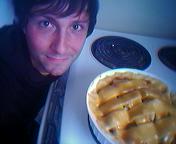
On Thanksgiving, Jamie stayed home from work and baked an apple pie. It was his first, and it was delicious. He wished more people could have tasted it--or even seen it for that matter.
23 November 2006
22 Nov
When young people on drugs play in a band, their music sometimes transcends composure and triggers an immediate response from the audience. When young people on drugs grow up and stop using drugs but are still in a band, they tend to lean toward singing hackneyed protest lyrics that sound more like lectures than songs. If the audience is thinking instead of dancing, worry: they've lost the connection.
21 November 2006
21 Nov
If you screamed your hardest--really stretched your vocal chords--you would have to retain that volume and intensity for three years to generate enough energy to heat one cup of coffee.
And that's assuming you want it black. Screaming to chill milk is another story.
And that's assuming you want it black. Screaming to chill milk is another story.
20 November 2006
20 Nov--Tea, pt.6
The exchange between Jamie and the El Al agent would be familiar to thousands of travellers. It's a frustrating ping-pong causing the heart to race, the face to flush, and the rest of the body to generally prepare to turn itself into a projectile weapon, although a very un-aerodynamic one.
"If you want to get on this flight," she said sternly, "you'll have to buy another ticket--right now. We take Visa."
"All I have is a Check Card from back home."
"Well, it's cash then. 450 Euros."
Livid, Jamie dug his heels in for an argument. He opened his mouth to let the torrent of insults and accusations free. Weeks of pent up mental and sexual frustration was about to hit this woman with more stink and ferocity than a storm of hormonal baboons.
But like a drop of rain on a window, his mind suddenly changed direction. Where a second ago he would have been delighted to scream and pound the desk, he now had a vivid image of his brother standing at the airport waiting for him. And he did something he hadn't done for a long time: he acted.
Precisely how he acted may differ depending on who witnessed his mad dash across the airport to the nearest ATM. Sidestepping passengers and hurdling numbers piles of baggage, only one thing crossed his mind as he sprinted: "This place had goddamn better take Irish plastic."
Discovering the ATM actually gave him money was the first positive experience he'd had in days. He was uplifted.
Getting stalled at a security check for so long he missed his flight anyway pretty much dropped him right back to where he'd been.
A young man approached him.
"I'm sorry this is taking so long, and I apologise that you've missed your flight. Can I get you something?" He asked. Jamie could tell this was routine courtesy, and that the man was not so fussed about making him miss his flight.
"Yes, thank you. I'll have a tea. Earl Grey. With milk." Sympathy tea. He couldn't stand the thought of it.
When his bags finally cleared security, he was ushered through to wait in boarding. His tea sat untouched beside his chair.
What he failed to realise--or they failed to tell him--was that once in boarding, there's no going back. No trip to the bar. No sandwiches. No--and this was the worst part--smoking. Jamie circled the small, donut-shaped room two or three times looking for a dark corner, a hidden room where he could puff a sneaky Lucky Strike. There was nothing. Until his third lap.
He smelled smoke. There WAS a dark corner. Smoked seemed to hover, emanating from nowhere. He walked closer, closer, and he was almost on top of them before he saw that it was not a dark corner after all: four Hasidic Jews properly dressed sat cross-legged smoking nonchalantly. Above them was a bold, red sign that read Défense de fumer. Jamie gestured to it and asked one of the men, "It's okay to smoke here?"
One answered with a half-interested shrug, "No, but they give us no choice?" It was as if rules, were they not agreed upon, did not apply. And since they were given no alternative, these men were forced to create it. Jamie smiled.
"Can I borrow your lighter?" He asked politely.
And so he spend his last hours in Paris sandwiched between black-clad Jews in a dark corner of an airport. They talked to him in English, told him places to visit, but were generally silent. They smoked for close to an hour beneath the "no smoking" sign serenely defiant.
The time it takes that which is foreign to overwhelm you is time you spend enduring. You will be heartbroken and lonely. You will be broke. You will spend your last dollar on a ticket you've already purchased. You will be rejected. You will be scrutinised. But if you can find common ground with someone during any of this--even if it is just for the length of a cigarette--the perspective will keep you company.
In Tel Aviv John and Sara waited. Jamie's flight arrived at 5:00am. and when he arrived, they sped to Jerusalem. To Jamie, jostling in the back seat of a speeding Fiat, it felt like his getaway car.
They ended up on Sara's rooftop watching the sunrise and drinking cup after cup of thick, black coffee.
"If you want to get on this flight," she said sternly, "you'll have to buy another ticket--right now. We take Visa."
"All I have is a Check Card from back home."
"Well, it's cash then. 450 Euros."
Livid, Jamie dug his heels in for an argument. He opened his mouth to let the torrent of insults and accusations free. Weeks of pent up mental and sexual frustration was about to hit this woman with more stink and ferocity than a storm of hormonal baboons.
But like a drop of rain on a window, his mind suddenly changed direction. Where a second ago he would have been delighted to scream and pound the desk, he now had a vivid image of his brother standing at the airport waiting for him. And he did something he hadn't done for a long time: he acted.
Precisely how he acted may differ depending on who witnessed his mad dash across the airport to the nearest ATM. Sidestepping passengers and hurdling numbers piles of baggage, only one thing crossed his mind as he sprinted: "This place had goddamn better take Irish plastic."
Discovering the ATM actually gave him money was the first positive experience he'd had in days. He was uplifted.
Getting stalled at a security check for so long he missed his flight anyway pretty much dropped him right back to where he'd been.
A young man approached him.
"I'm sorry this is taking so long, and I apologise that you've missed your flight. Can I get you something?" He asked. Jamie could tell this was routine courtesy, and that the man was not so fussed about making him miss his flight.
"Yes, thank you. I'll have a tea. Earl Grey. With milk." Sympathy tea. He couldn't stand the thought of it.
When his bags finally cleared security, he was ushered through to wait in boarding. His tea sat untouched beside his chair.
What he failed to realise--or they failed to tell him--was that once in boarding, there's no going back. No trip to the bar. No sandwiches. No--and this was the worst part--smoking. Jamie circled the small, donut-shaped room two or three times looking for a dark corner, a hidden room where he could puff a sneaky Lucky Strike. There was nothing. Until his third lap.
He smelled smoke. There WAS a dark corner. Smoked seemed to hover, emanating from nowhere. He walked closer, closer, and he was almost on top of them before he saw that it was not a dark corner after all: four Hasidic Jews properly dressed sat cross-legged smoking nonchalantly. Above them was a bold, red sign that read Défense de fumer. Jamie gestured to it and asked one of the men, "It's okay to smoke here?"
One answered with a half-interested shrug, "No, but they give us no choice?" It was as if rules, were they not agreed upon, did not apply. And since they were given no alternative, these men were forced to create it. Jamie smiled.
"Can I borrow your lighter?" He asked politely.
And so he spend his last hours in Paris sandwiched between black-clad Jews in a dark corner of an airport. They talked to him in English, told him places to visit, but were generally silent. They smoked for close to an hour beneath the "no smoking" sign serenely defiant.
The time it takes that which is foreign to overwhelm you is time you spend enduring. You will be heartbroken and lonely. You will be broke. You will spend your last dollar on a ticket you've already purchased. You will be rejected. You will be scrutinised. But if you can find common ground with someone during any of this--even if it is just for the length of a cigarette--the perspective will keep you company.
In Tel Aviv John and Sara waited. Jamie's flight arrived at 5:00am. and when he arrived, they sped to Jerusalem. To Jamie, jostling in the back seat of a speeding Fiat, it felt like his getaway car.
They ended up on Sara's rooftop watching the sunrise and drinking cup after cup of thick, black coffee.
19 November 2006
18 Nov--Tea :: Intermission
We interrupt the conclusion of Tea to bring you this message from our sponsor:

"I'm on safawi!"
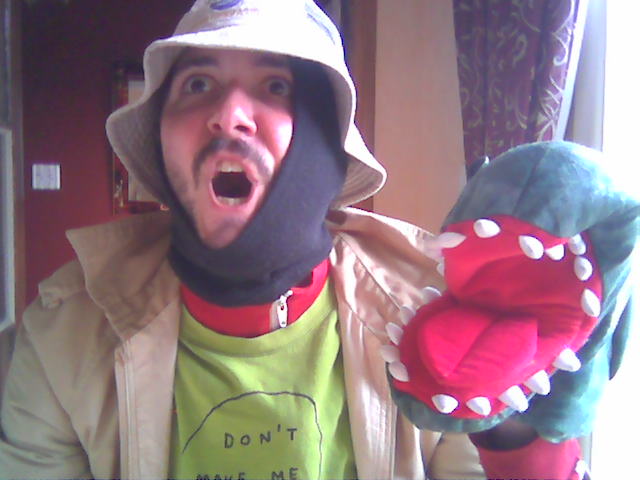
"I'm on safawi!"
18 November 2006
17 Nov--Tea, pt.5
John had been living in Israel for almost three months. In those three months he had sought work as a housekeeper, a gardener for an Ethiopian woman, and an au pair. When you don't speak Hebrew, your choices are limited. Much of his day was spent trying to communicate physically what he couldn't communicate verbally. This was irritating at least, exhausting at the extreme--especially when he had to ask of someone wanted their lawn mowed and their flower bed weeded. By the time they understood and agreed, he was too tired to do the work. He envied his brother, Jamie, during these times. At least Jamie was living in a country where they spoke English; all he had to get past was an accent.
At the El Al terminal in Paris's Charles de Galle airport, Jamie handed his e-ticket to the customer service agent. She looked at his ticket, looked at him, and immediately picked up the phone. She had encountered passengers who had booked flights through www.lastminute.com before, and they were always suspect. From French sympathisers of Palestine trying to smuggle any number of things, to the American students coming to protest a conflict they didn't understand, they all booked at the last minute trying to sneak in under the radar. But she knew about that trick, and she wasn't going to let this one through. She looked at his clothes and figured he must be French. While the phone rang, she thought about what she would tell the agent at Last Minute Flights. "I'll say we didn't get the ticket. He'll have to buy another ticket. They never buy another ticket. But I'll have to sound convincing." The receptionist on the other end picked up, and the charade began.
Jamie listened to the El Al agent speaking in French. No matter how many times he heard it, he couldn't make out a single word. "Hell," he thought, "she could be insulting me in any number of ways, and I wouldn't even know it." His mind began to wander. He tried to calculate what time it would be when he landed in Tel Aviv. He looked at his watch. His flight was scheduled to leave in about an hour. As long as everything went smoothly from now on, he'd arrive on time and surprise his brother.
The El Al agent hung up the phone and sighed. It appeared to Jamie everything was in order. He suddenly felt good; he was regaining confidence. "I think I'll try out a bit of French," he thought. "I won't be here very long anyway." She handed the e-ticket back to him.
"Pas de problem?" He said in his best accent.
"Non, non--beaucoup de problem . . ." And that was as far as his understanding took him. She commenced to talk very quickly, emphasising particular words and pointing every so often at his e-ticket. His eyes began to glass over, and he suddenly felt very tired. She would have said just as much had she simpy opened her mouth and emitted a constant, low drone. Any grain of confidence Jamie had gathered before had just been lost in her sandstorm of French. He exhaled loudly, and decided it was time to interrupt.
"Yeah, sorry, I don't really speak French."
"Oh," she replied, a little off guard. "Well, there's a very big problem. You don't have a ticket."
At the El Al terminal in Paris's Charles de Galle airport, Jamie handed his e-ticket to the customer service agent. She looked at his ticket, looked at him, and immediately picked up the phone. She had encountered passengers who had booked flights through www.lastminute.com before, and they were always suspect. From French sympathisers of Palestine trying to smuggle any number of things, to the American students coming to protest a conflict they didn't understand, they all booked at the last minute trying to sneak in under the radar. But she knew about that trick, and she wasn't going to let this one through. She looked at his clothes and figured he must be French. While the phone rang, she thought about what she would tell the agent at Last Minute Flights. "I'll say we didn't get the ticket. He'll have to buy another ticket. They never buy another ticket. But I'll have to sound convincing." The receptionist on the other end picked up, and the charade began.
Jamie listened to the El Al agent speaking in French. No matter how many times he heard it, he couldn't make out a single word. "Hell," he thought, "she could be insulting me in any number of ways, and I wouldn't even know it." His mind began to wander. He tried to calculate what time it would be when he landed in Tel Aviv. He looked at his watch. His flight was scheduled to leave in about an hour. As long as everything went smoothly from now on, he'd arrive on time and surprise his brother.
The El Al agent hung up the phone and sighed. It appeared to Jamie everything was in order. He suddenly felt good; he was regaining confidence. "I think I'll try out a bit of French," he thought. "I won't be here very long anyway." She handed the e-ticket back to him.
"Pas de problem?" He said in his best accent.
"Non, non--beaucoup de problem . . ." And that was as far as his understanding took him. She commenced to talk very quickly, emphasising particular words and pointing every so often at his e-ticket. His eyes began to glass over, and he suddenly felt very tired. She would have said just as much had she simpy opened her mouth and emitted a constant, low drone. Any grain of confidence Jamie had gathered before had just been lost in her sandstorm of French. He exhaled loudly, and decided it was time to interrupt.
"Yeah, sorry, I don't really speak French."
"Oh," she replied, a little off guard. "Well, there's a very big problem. You don't have a ticket."
16 November 2006
16 Nov--Tea, pt.4
In Jamie's hand was a small pamphlet he picked up from the ticket office in Angers. On it was a colourful version of Paris found only on bus station brochures: where the train station was large and easily seen; where there were only four streets in the whole city; where those four streets were either yellow or blue; and where the Eiffel Tower had bulging eyes and an open-mouthed smile.
This was his map.
The "ample time" Jamie had allotted himself to change from train to bus was fast disappearing. The 30 minutes he spent spelunking the Paris metro was proving costly as he frantically looked for the 300ft baguette his map told him was in front of him--right where the blue and yellow roads meet to create a green intersection. He was almost a kilometre from the station now. Flanking him on both sides were tall, brick houses who's tops were obscured by ancient sycamore and poplar. He looked at his map and figured he was probably on one of the blue roads. "This is useless," he puffed. Irritated and tired, he threw the map in the nearest waste bin. It was the smartest decision he'd made all day.
"Sorry, are you looking for the bus to the airport?" He head a voice with an English accent say. He turned around and saw a middle aged woman carrying a paper bag of groceries.
"Yeah. Yeah, actually I am. How did you know?" Was it written all over him?
"It's written on your hand." She replied. "The bus is just down this road, then take your first left. But you'd better hurry."
"Thank you. Thanks. Really." Jamie turned and jogged as best he could. Sure enough, around the corner was one, lone bus. He checked with the driver to ensure it was the right bus, and between Jamie's broken French and the driver's broken English, they reached an agreement: Yes, this was a bus. Jamie decided to take the woman's word for it. It was too late to reconsider, anyway. But it wasn't until the bus pulled away and finally headed in the correct direction did Jamie relax. In half an hour he would be at the airport, and a short time later on a plane to Israel. He closed his eyes and let a easy wave of relief pass over him. He could do the airport. Airports were easy.
Of course they were--unless you're traveling to a country at war.
This was his map.
The "ample time" Jamie had allotted himself to change from train to bus was fast disappearing. The 30 minutes he spent spelunking the Paris metro was proving costly as he frantically looked for the 300ft baguette his map told him was in front of him--right where the blue and yellow roads meet to create a green intersection. He was almost a kilometre from the station now. Flanking him on both sides were tall, brick houses who's tops were obscured by ancient sycamore and poplar. He looked at his map and figured he was probably on one of the blue roads. "This is useless," he puffed. Irritated and tired, he threw the map in the nearest waste bin. It was the smartest decision he'd made all day.
"Sorry, are you looking for the bus to the airport?" He head a voice with an English accent say. He turned around and saw a middle aged woman carrying a paper bag of groceries.
"Yeah. Yeah, actually I am. How did you know?" Was it written all over him?
"It's written on your hand." She replied. "The bus is just down this road, then take your first left. But you'd better hurry."
"Thank you. Thanks. Really." Jamie turned and jogged as best he could. Sure enough, around the corner was one, lone bus. He checked with the driver to ensure it was the right bus, and between Jamie's broken French and the driver's broken English, they reached an agreement: Yes, this was a bus. Jamie decided to take the woman's word for it. It was too late to reconsider, anyway. But it wasn't until the bus pulled away and finally headed in the correct direction did Jamie relax. In half an hour he would be at the airport, and a short time later on a plane to Israel. He closed his eyes and let a easy wave of relief pass over him. He could do the airport. Airports were easy.
Of course they were--unless you're traveling to a country at war.
15 November 2006
15 Nov--Tea, pt.3
The train from Angers stopped, and the lack of movement awoke Jamie. He looked out the window into darkness. Glancing at his watch, he soon realised it couldn't be night--it was 11:00 am. Then he heard the echo--he was underground.
The station in Paris is a connecting point between the city's subway services, the RER and the Metro, and it's national train network. From the outside, its tall, embellished windows and 19th-century stone architecture purports an air of elegance. Inside it is a labyrinth of escalators, stairs, and tunnels. Quite logically, information is regularly read over the PA and directions flash in yellow and red across a myriad of digital screens. Getting in and out is meant to be a non-issue. Unless you don't speak French.
After 30 minutes of wrong turns, backtracking, following those who looked like they knew where they were going, "vouslez vous"-ing passers by, and finally just heading "up" as much as possible, Jamie emerged from the bowels of the station and into its main foyer. He looked for the nearest exit--it didn't matter where it led, he just wanted out--and stepped, alone, into the middle of Paris.
On this day, the city held no charm. He was not looking at the Eiffel Tower for its beauty and significance; he was using it to navigate. He did not see the kiosks as quaint tokens of gay Paris; he wanted water, and they had it. Stone-faced, he watched tourists snapping photos. A group of American high schoolers boarded a bus nearby. He listened to their effervescent laughter and ohmygods. They were pointing at the Arc de Triomphe on one horizon, at Sacre Cour on the other, and at Notre Dame nestled beside the Seine. For them this was iconic Paris--the Paris--and they would never forget these views. Jamie saw only a city--something he had to get through.
Like many things in life and love, the bus was not where Jamie first looked.
The station in Paris is a connecting point between the city's subway services, the RER and the Metro, and it's national train network. From the outside, its tall, embellished windows and 19th-century stone architecture purports an air of elegance. Inside it is a labyrinth of escalators, stairs, and tunnels. Quite logically, information is regularly read over the PA and directions flash in yellow and red across a myriad of digital screens. Getting in and out is meant to be a non-issue. Unless you don't speak French.
After 30 minutes of wrong turns, backtracking, following those who looked like they knew where they were going, "vouslez vous"-ing passers by, and finally just heading "up" as much as possible, Jamie emerged from the bowels of the station and into its main foyer. He looked for the nearest exit--it didn't matter where it led, he just wanted out--and stepped, alone, into the middle of Paris.
On this day, the city held no charm. He was not looking at the Eiffel Tower for its beauty and significance; he was using it to navigate. He did not see the kiosks as quaint tokens of gay Paris; he wanted water, and they had it. Stone-faced, he watched tourists snapping photos. A group of American high schoolers boarded a bus nearby. He listened to their effervescent laughter and ohmygods. They were pointing at the Arc de Triomphe on one horizon, at Sacre Cour on the other, and at Notre Dame nestled beside the Seine. For them this was iconic Paris--the Paris--and they would never forget these views. Jamie saw only a city--something he had to get through.
Like many things in life and love, the bus was not where Jamie first looked.
14 November 2006
14 Nov--Tea, pt.2
Jamie shrugged off his backpack, stuffed plump with clothing, food, utensils--a cumbersome but necessary burden--onto the platform. It was 6:45am, and in a few minutes a train would take him from Angers to Paris. There, he would catch a bus to Charles de Gaulle airport to wait for his flight to Tel Aviv. Jamie was going to see his brother.
The sleek, white train slid quietly into the station--a far cry from the hunkering metal slugs churtling along the tracks back in Ireland. Jamie heaved his backpack onto the train and looked over his shoulder. Juliette was there. After eluding him for nearly three weeks, she stood before him sleepy eyed, but awake. She smiled and shrugged her shoulders as if to say, "what did you expect?" Jamie returned her gesture with a tight-chinned face--it came naturally, and when he made it he realised it was a face his father would make before saying to him, "you did the best you could with what you had."
Jamie slid away with the train, leaving her and Angers behind him. He leaned his head against the seat and tried to sleep--rest was something he had ignored for many days. Little did he know how precious that nap was.
Things were about to get much, much worse.
The sleek, white train slid quietly into the station--a far cry from the hunkering metal slugs churtling along the tracks back in Ireland. Jamie heaved his backpack onto the train and looked over his shoulder. Juliette was there. After eluding him for nearly three weeks, she stood before him sleepy eyed, but awake. She smiled and shrugged her shoulders as if to say, "what did you expect?" Jamie returned her gesture with a tight-chinned face--it came naturally, and when he made it he realised it was a face his father would make before saying to him, "you did the best you could with what you had."
Jamie slid away with the train, leaving her and Angers behind him. He leaned his head against the seat and tried to sleep--rest was something he had ignored for many days. Little did he know how precious that nap was.
Things were about to get much, much worse.
13 November 2006
13 Nov--Tea, pt.1
It has been just over a month since Jamie tasted coffee. Some weeks ago, on his birthday, he decided to fix a cup of English Breakfast tea. He had not intended to abstain from coffee outright, but the idea (and subsequent taste) of tea reminded him of something.
When the kettle had boiled, he poured the water over his teabag and quickly lost track of his thoughts. When the mind wanders, the body reverts to automation, like a mechanical arm on Toyota's assembly line, doing only what is programmed. His hands set the kettle back on its base, opened the refrigerator, grabbed the one-litre carton of skim milk, and carefully added it to the tea. But he was conscious of nothing. Jamie's eyes went cotton, and his face relaxed. In his cup, the milk, the water, and the tea twisted against themselves and each other until there was no difference.
Jamie drank tea toward the end of his one-year stay in Ireland, a habit he picked up from his closest Irish friend, Aidan. "Earl Grey, heavy on the cow," he would say in a turn of phrase that was characteristic of his quick-wit and effortless vigilance. Jamie was often struck by how easily he peppered his speech with metaphor. Once, at the pub, Aidan took a drink, tilted his head back and said, "Jaysus, I feel like an ant in a beehive." Jamie was speechless. Or at Aidan's flat, catching bubbles in his kitchen, when he suddenly stopped and let the soapy things drift with the words, "One day you reach a point where you just have to accept that you're never going to be an astronaut."
And when Jamie left--"Oh the price of leaving, the cost of coming home."
When He flew from Ireland to chase a girl around Western France, he was still drinking tea. Indeed, it gave him more satisfaction (and attention) than the object of his flight. The French, he soon learned, never surrender; they simply draw you deeper into their den. He worked very hard to become so very lost, and in the dark of his own tent on the shore of Isle de Ray he found illumination in words written about tea: "Let us dream of evanescence and linger in the beautiful foolishness of things."
When the kettle had boiled, he poured the water over his teabag and quickly lost track of his thoughts. When the mind wanders, the body reverts to automation, like a mechanical arm on Toyota's assembly line, doing only what is programmed. His hands set the kettle back on its base, opened the refrigerator, grabbed the one-litre carton of skim milk, and carefully added it to the tea. But he was conscious of nothing. Jamie's eyes went cotton, and his face relaxed. In his cup, the milk, the water, and the tea twisted against themselves and each other until there was no difference.
Jamie drank tea toward the end of his one-year stay in Ireland, a habit he picked up from his closest Irish friend, Aidan. "Earl Grey, heavy on the cow," he would say in a turn of phrase that was characteristic of his quick-wit and effortless vigilance. Jamie was often struck by how easily he peppered his speech with metaphor. Once, at the pub, Aidan took a drink, tilted his head back and said, "Jaysus, I feel like an ant in a beehive." Jamie was speechless. Or at Aidan's flat, catching bubbles in his kitchen, when he suddenly stopped and let the soapy things drift with the words, "One day you reach a point where you just have to accept that you're never going to be an astronaut."
And when Jamie left--"Oh the price of leaving, the cost of coming home."
When He flew from Ireland to chase a girl around Western France, he was still drinking tea. Indeed, it gave him more satisfaction (and attention) than the object of his flight. The French, he soon learned, never surrender; they simply draw you deeper into their den. He worked very hard to become so very lost, and in the dark of his own tent on the shore of Isle de Ray he found illumination in words written about tea: "Let us dream of evanescence and linger in the beautiful foolishness of things."
12 November 2006

11 Nov
One may never evade a memory. Like a mosquito haunting the bedroom at night, it is invisible and at the same time shares with us its poison heart. At the age of 29, Jamie can slip into his memory of himself as a child as easily as he slides beneath the duvet. He takes a moment to recall the day he landed in New Zealand. "I was 26." He remarks to a friend. She's drinking cheap merlot; he, coffee. "But 26 feels like a separate me." She agrees and reminds him how strange it is to think of being 18.
"You can visit your memories and be there again. And then, in a flash, be back to now. We do not so much get older," she says, "as we merely get farther."
Jamie finishes his coffee and turns his attention to the band. While he agrees with her philosophy on time and aging, all he can think of is how he wishes he had learned to play the guitar.
"You can visit your memories and be there again. And then, in a flash, be back to now. We do not so much get older," she says, "as we merely get farther."
Jamie finishes his coffee and turns his attention to the band. While he agrees with her philosophy on time and aging, all he can think of is how he wishes he had learned to play the guitar.
09 November 2006
9 Nov
Reading Cinemas is a beast of a theatre hunkered inside a slipshod shopping mall in the churning belly of Wellington central. Subtlety is not in its character. Liam and Jamie ride the escalator up to the mezzanine. They gesture to the ticketmaster, and are waved past. No movie awaits them. Both are attending a company meeting. "A key lecture on the restructuring of the TEC," the email read. "Mandatory for all employees," a later email declared. "Not something you should be late for," their manager dutifully reminded them. "Shit's going down," a colleague noted. The TEC executives reserved a theatre here for the space and the screen--this was going to be one hell of a powerpoint presentation.
The meeting was scheduled to begin at 3:00pm sharp. Jamie and Liam waltzed in at five past. As they approached the entrance, a voice announced over the PA, "the last two are coming in."
There they stood. Two-hundred eyes focused directly on them--one-hundred of which, twenty minutes later, would no longer be employed. The two of them stood frozen in so many gazes. Liam raised the large drinking straw to his lips and took a long slurp.
"Bubbleshakes were a bad idea," Jamie said.
The meeting was scheduled to begin at 3:00pm sharp. Jamie and Liam waltzed in at five past. As they approached the entrance, a voice announced over the PA, "the last two are coming in."
There they stood. Two-hundred eyes focused directly on them--one-hundred of which, twenty minutes later, would no longer be employed. The two of them stood frozen in so many gazes. Liam raised the large drinking straw to his lips and took a long slurp.
"Bubbleshakes were a bad idea," Jamie said.
08 November 2006
8 Nov
"I feel like I'm getting old." Jamie says to a workmate.
"You just have to live in the moment." She replies. How zen, Jamie thinks.
And he is right. One of the core tenets of Buddhism is to focus on now and only now. All the cliches of meditation come in here: paying attention to your breath, to the tension in your muscles--all are exercises meant to remind the practitioner, "you are distracted; focus." Taoism, too, instructs people that there is nothing outside this noisy, incomprehensibly complicated moment.
Jamie walks down a dark alley of pedestrian stairs linking The Terrace to Lambton Quay. He crosses the street and notices the wind pause as he passes the parliament building. He turns right at the next light, walks past the university book store and stops just before the descent into the subway leading to the train station (note: a subway being an underground sidewalk). The flax are in bloom, and the tuis are well aware. In a small garden, flax flaunt their yellow blossoms. A tui flaps into them and, clinging to the stalks, pokes its beak into each delicate flute. Is feathers catch errant sunlight like cops, turning it all back. Jamie is struck by the pale green beneath the bird's neck; the deep sea indigo of its crown. He slowly moves his hand to his pocket to reach his camera when suddenly three more tuis crash into the flax. Their heads bobbing, one begins its signature song.
Jamie decides to forget about the camera. Sometimes, you just have to be there.
"You just have to live in the moment." She replies. How zen, Jamie thinks.
And he is right. One of the core tenets of Buddhism is to focus on now and only now. All the cliches of meditation come in here: paying attention to your breath, to the tension in your muscles--all are exercises meant to remind the practitioner, "you are distracted; focus." Taoism, too, instructs people that there is nothing outside this noisy, incomprehensibly complicated moment.
Jamie walks down a dark alley of pedestrian stairs linking The Terrace to Lambton Quay. He crosses the street and notices the wind pause as he passes the parliament building. He turns right at the next light, walks past the university book store and stops just before the descent into the subway leading to the train station (note: a subway being an underground sidewalk). The flax are in bloom, and the tuis are well aware. In a small garden, flax flaunt their yellow blossoms. A tui flaps into them and, clinging to the stalks, pokes its beak into each delicate flute. Is feathers catch errant sunlight like cops, turning it all back. Jamie is struck by the pale green beneath the bird's neck; the deep sea indigo of its crown. He slowly moves his hand to his pocket to reach his camera when suddenly three more tuis crash into the flax. Their heads bobbing, one begins its signature song.
Jamie decides to forget about the camera. Sometimes, you just have to be there.
07 November 2006
7 Nov--Chasing Yeats
Yesterday the headlines shouted for the head of Saddam Hussein, his guilty neck fuzzied underneath a salt-and-pepper beard. Talk of death was virulent, and it spread city-wide.
But that was yesterday. Today is the Melbourne Cup, so Australia and New Zealand promptly brush aside world politics to focus on more the more pressing issue of what horse to bet on. The favourite is a horse from Ireland named Yeats. Besides being number one in the world, it also has the status of being the first horse whose name was fitting, if not poignant. The other contenders include Poprock, from Japan, Mandela, from New Zealand, and Headturner, from Australia. There are more, of course, but the only one on Jamie's mind is Yeats.
"I'm off to the TAB," he says to Kate, the Web team leader, as he throws on his rain jacket. Although the race is in Melbourne, it is broadcast as a prime-time event in New Zealand.
"Better hurry," she says without looking up from her computer, "Race starts in 20 minutes. Who's your pick?"
"Yeats." Jamie replies, and he only knew there was a horse named Yeats because an hour ago someone asked him for $2.00 to go into an office sweepstakes. When he saw the Irish poet's name on the list, he figured this was as good a time as any to begin a gambling habit.
Outside, rain drizzled onto the city streets making cars sound louder and people walk faster. Many of the pubs in the city centre has betting tables inside them, and he walked into the first one displaying the blue TAB sign in its window. He had withdrawn $40 from the ATM on his way down, and he reached for his wallet as he approached the table.
"I'd like to put--" but he was cut off mid sentence.
"You gotta fill out a form, mate." The man said in a gruff, irritated tone. He pointed to a pile of orange and white cards. Jamie picked one up and stepped aside to let others make their bets. The betting form was completely foreign to him, and the longer he looked at it, the stranger it became. There were boxes at the top that numbered to 20, denomination and percentage boxes. and a series of columns and arrows that may could have brought Douglas Adams back to life by their sheer absurdity.
After a few minutes, Jamie realised his brain had stopped trying to figure the race form out. It was instead thinking about how nice it would be to learn a musical instrument. Jamie looked at the clock. The race began in less than five minutes. He turned to the man standing at his right who had just ordered a pint of lager.
"Hey, can you give me a hand with this?" He asked, trying to sound less than pathetic, but not succeeding very well.
"Just ask Joe, there." He pointed to the man behind the table; the man who had told him to get a race form in the first place.
"Ah, thanks." Jamie didn't feel like approaching Joe again, so he approached a group of younger guys for help.
"Na, mate. No use. Race is gonna start. It'd take too long." One of them said. Jamie felt a pang of defeat. At this point, he was sure Yeats was going to win--or at least place. The $40 in his pocket felt heavy and wilted, a limp version of what it could be. He looked over to Joe behind the betting table. He was waving people away. It was too late.
Jamie smiled politely, and headed for the door. The bar was hot, and he was still in his jacket. He could feel beads of sweat gathering on the tip of his nose. He stepped outside, and the cool spring air was instant relief. There were a group of men smoking by the door. One of them was bemoaning the fact he hadn't arrived in time to place a bet. And then Jamie had an idea.
"Who's your horse?" Jamie asked.
"Poprock I've got an inside tip." Right, Jamie thought. Just like all the rest.
"Wanna bet? I'll put $40 on Yeats coming in ahead of your horse." Jamie said, feeling he had nothing to lose, but not completely understanding that, in fact, he had exactly $40 to lose.
"Deal. $40 to the winner." They shook. There were witnesses. And everyone piled inside to watch the race play out on the television.
The horses pounded and so did Jamie's chest--Yeats was in front. Very, very in front. And then something funny happened. Yeats slowed down, or at least it seemed to Jamie he did. A group of four horses were closing the gap--5 metres, 3 metres. Jamie finally heard the announcer's voice say the name "Poprock," and Jamie noticed the horse chasing Yeats. And in seconds it was the horse Yeats was chasing. Then there were two horses ahead of Yeats--he was a gonner. Jamie recalled the epitaph on the Irish poet's grave: Cast a cold Eye/On life/On death/Horseman, pass by. Before long, Jamie realised he had just thrown away his money.
Or had he?
He was standing at the back of the crowd, and all in the crowd had their backs to him. He glanced at the race on the TV. It would be over in seconds. Run, he though. Run.
But he couldn't move. A moment later, the race was over, and people were either howling with glee or cursing their luck. He tapped his betting partner on the shoulder, and held out the money.
"Oh, mate, I thought you were kidding. Nah, keep your money. I've been to every other TAB in town placing the same bet, I just didn't make it to this one. Sweet Jesus, mate. I'm loaded! Wanna drink?"
Jamie thought, what a stupid question.
But that was yesterday. Today is the Melbourne Cup, so Australia and New Zealand promptly brush aside world politics to focus on more the more pressing issue of what horse to bet on. The favourite is a horse from Ireland named Yeats. Besides being number one in the world, it also has the status of being the first horse whose name was fitting, if not poignant. The other contenders include Poprock, from Japan, Mandela, from New Zealand, and Headturner, from Australia. There are more, of course, but the only one on Jamie's mind is Yeats.
"I'm off to the TAB," he says to Kate, the Web team leader, as he throws on his rain jacket. Although the race is in Melbourne, it is broadcast as a prime-time event in New Zealand.
"Better hurry," she says without looking up from her computer, "Race starts in 20 minutes. Who's your pick?"
"Yeats." Jamie replies, and he only knew there was a horse named Yeats because an hour ago someone asked him for $2.00 to go into an office sweepstakes. When he saw the Irish poet's name on the list, he figured this was as good a time as any to begin a gambling habit.
Outside, rain drizzled onto the city streets making cars sound louder and people walk faster. Many of the pubs in the city centre has betting tables inside them, and he walked into the first one displaying the blue TAB sign in its window. He had withdrawn $40 from the ATM on his way down, and he reached for his wallet as he approached the table.
"I'd like to put--" but he was cut off mid sentence.
"You gotta fill out a form, mate." The man said in a gruff, irritated tone. He pointed to a pile of orange and white cards. Jamie picked one up and stepped aside to let others make their bets. The betting form was completely foreign to him, and the longer he looked at it, the stranger it became. There were boxes at the top that numbered to 20, denomination and percentage boxes. and a series of columns and arrows that may could have brought Douglas Adams back to life by their sheer absurdity.
After a few minutes, Jamie realised his brain had stopped trying to figure the race form out. It was instead thinking about how nice it would be to learn a musical instrument. Jamie looked at the clock. The race began in less than five minutes. He turned to the man standing at his right who had just ordered a pint of lager.
"Hey, can you give me a hand with this?" He asked, trying to sound less than pathetic, but not succeeding very well.
"Just ask Joe, there." He pointed to the man behind the table; the man who had told him to get a race form in the first place.
"Ah, thanks." Jamie didn't feel like approaching Joe again, so he approached a group of younger guys for help.
"Na, mate. No use. Race is gonna start. It'd take too long." One of them said. Jamie felt a pang of defeat. At this point, he was sure Yeats was going to win--or at least place. The $40 in his pocket felt heavy and wilted, a limp version of what it could be. He looked over to Joe behind the betting table. He was waving people away. It was too late.
Jamie smiled politely, and headed for the door. The bar was hot, and he was still in his jacket. He could feel beads of sweat gathering on the tip of his nose. He stepped outside, and the cool spring air was instant relief. There were a group of men smoking by the door. One of them was bemoaning the fact he hadn't arrived in time to place a bet. And then Jamie had an idea.
"Who's your horse?" Jamie asked.
"Poprock I've got an inside tip." Right, Jamie thought. Just like all the rest.
"Wanna bet? I'll put $40 on Yeats coming in ahead of your horse." Jamie said, feeling he had nothing to lose, but not completely understanding that, in fact, he had exactly $40 to lose.
"Deal. $40 to the winner." They shook. There were witnesses. And everyone piled inside to watch the race play out on the television.
The horses pounded and so did Jamie's chest--Yeats was in front. Very, very in front. And then something funny happened. Yeats slowed down, or at least it seemed to Jamie he did. A group of four horses were closing the gap--5 metres, 3 metres. Jamie finally heard the announcer's voice say the name "Poprock," and Jamie noticed the horse chasing Yeats. And in seconds it was the horse Yeats was chasing. Then there were two horses ahead of Yeats--he was a gonner. Jamie recalled the epitaph on the Irish poet's grave: Cast a cold Eye/On life/On death/Horseman, pass by. Before long, Jamie realised he had just thrown away his money.
Or had he?
He was standing at the back of the crowd, and all in the crowd had their backs to him. He glanced at the race on the TV. It would be over in seconds. Run, he though. Run.
But he couldn't move. A moment later, the race was over, and people were either howling with glee or cursing their luck. He tapped his betting partner on the shoulder, and held out the money.
"Oh, mate, I thought you were kidding. Nah, keep your money. I've been to every other TAB in town placing the same bet, I just didn't make it to this one. Sweet Jesus, mate. I'm loaded! Wanna drink?"
Jamie thought, what a stupid question.
06 November 2006
5 Nov--Guy Fawkes' Night
On Guy Fawkes' night, the trains heave with drunk, adreneline-fueled youth,
and Wellington station echoes the screams of jeering teens.
Fifteen minutes hardly seems long enough.
and Wellington station echoes the screams of jeering teens.
Fifteen minutes hardly seems long enough.
04 November 2006
4 Nov
For nearly 25 years the kiosk at the entrance to Wellington train station has provided patrons various newspapers, drinks, sweets, and a small assortment of pies. It has almost reached the status of an institution, something to count on, something to trust; indelible. In the eight short months Jamie has been catching the train into Wellington from Titahi Bay, he's picked up the Dominion Post (and once in a while, when he's mildly hungover, a bacon-and-egg pie). The act of dropping $1.20 on the counter was habit--and he made sure he always had exact change, like, when in Limerick, he paid sixty cents exactly each morning for his scone from the bakery next door. It was comfortable, like he was participating in tradition or a local celebration.
Then one Friday as he hopped off the 7:48 from the bay, the sign before him stopped him dead: Last day of kiosk--closing tomorrow. He was not only disappointed, he felt insulted. He walked to the counter to pay for his paper and spoke to the older Maori woman for the first time.
"What's with the sign?" he asked.
"Closing down for ever." She said with the signature punctuated lilt of the Maori accent. "That New World is going in, and they don't like competition."
Jamie looked to his right, and couldn't believe he hadn't noticed the sign before. It had been there months proclaiming the site of the next in the line of New World chain grocery stores. He dropped his change on the counter.
"Dickheads." He said firmly, and she laughed.
"Yeah, it's pretty stink, eh?"
"Good luck."
"Thanks."
Jamie walked away and turned to see it once more. A wave of passengers pumped by like a surge of blood into the veins of the city, but he stood motionless, clotting the flow, hoping he might give the beast a heart attack.


Then one Friday as he hopped off the 7:48 from the bay, the sign before him stopped him dead: Last day of kiosk--closing tomorrow. He was not only disappointed, he felt insulted. He walked to the counter to pay for his paper and spoke to the older Maori woman for the first time.
"What's with the sign?" he asked.
"Closing down for ever." She said with the signature punctuated lilt of the Maori accent. "That New World is going in, and they don't like competition."
Jamie looked to his right, and couldn't believe he hadn't noticed the sign before. It had been there months proclaiming the site of the next in the line of New World chain grocery stores. He dropped his change on the counter.
"Dickheads." He said firmly, and she laughed.
"Yeah, it's pretty stink, eh?"
"Good luck."
"Thanks."
Jamie walked away and turned to see it once more. A wave of passengers pumped by like a surge of blood into the veins of the city, but he stood motionless, clotting the flow, hoping he might give the beast a heart attack.
03 November 2006
3 Nov--The Milk Man's Dead, Long Live the Milk Man
"When I was much younger, friend and I used to sell advertising on milk bottles," Peter begins. "Thought we going to be millionaires. We sold ads to Kellogg's and a few other businesses. Since the milk was delivered in bottles--glass bottles--it wasn't as simple as slapping on a sticker. There was a plant in Wellington that could embed the ads in the glass. The ads would last as long as the glass, so businesses loved the idea."
Jamie couldn't remember how they got onto the topic of milk bottles, but he was intrigued. In America, the process of home-delivered milk died long before Jamie was born. But many people in New Zealand--people much younger than Jamie--remember exchanging empties and looking forward to the brightly coloured bottle tops that arrived as Christmas neared. There are people in the North Island in their late teens who remember watching a man walk to the door carrying a crate of milk bottles--and they knew his name. The last glass-bottle milk delivery didn't happen in New Zealand until 1997.
Peter continues the story: how they could barely keep up with demand, how they were sure they'd sparked their careers, how it all worked so perfectly. And then it all died somewhat prematurely--stricken, as if by stroke or a cancer.
"The company that pressed the ads on the glass went bust." He took a drink from his beer. "They were the only ones who could; only ones in the country."
That was it. That was the end. The business that, so many years ago, appeared endless and bright shrunk to a singularity and finally disappeared.
"What a great time." Peter says suddenly, and Jamie is startled by his grin. Here was a life--a business, true, but a life nonetheless--that ended by way of unforeseen events, but Peter appeared to blame nobody. What was once endless and bright, although dimmed, still glowed, faintly, in his memory. And he could remember whenever he wanted. He could go back whenever he wanted. He could hold the glass in his hand whenever he wanted. It will always die, and it will never die.
Jamie couldn't remember how they got onto the topic of milk bottles, but he was intrigued. In America, the process of home-delivered milk died long before Jamie was born. But many people in New Zealand--people much younger than Jamie--remember exchanging empties and looking forward to the brightly coloured bottle tops that arrived as Christmas neared. There are people in the North Island in their late teens who remember watching a man walk to the door carrying a crate of milk bottles--and they knew his name. The last glass-bottle milk delivery didn't happen in New Zealand until 1997.
Peter continues the story: how they could barely keep up with demand, how they were sure they'd sparked their careers, how it all worked so perfectly. And then it all died somewhat prematurely--stricken, as if by stroke or a cancer.
"The company that pressed the ads on the glass went bust." He took a drink from his beer. "They were the only ones who could; only ones in the country."
That was it. That was the end. The business that, so many years ago, appeared endless and bright shrunk to a singularity and finally disappeared.
"What a great time." Peter says suddenly, and Jamie is startled by his grin. Here was a life--a business, true, but a life nonetheless--that ended by way of unforeseen events, but Peter appeared to blame nobody. What was once endless and bright, although dimmed, still glowed, faintly, in his memory. And he could remember whenever he wanted. He could go back whenever he wanted. He could hold the glass in his hand whenever he wanted. It will always die, and it will never die.
02 November 2006
2 Nov
If Jamie were a black bear, he'd be dead (average lifespan 18 years).
If Jamie were a hippopotamus, he'd be almost dead (average lifespan 30 years).
If Jamie were a mouse, he'd have been dead before he knew it (average lifespan 2 years).
If Jamie were a wolf, he would live in a pack, eat meat, snarl, and be dead by now (average lifespan 10 years).
If Jamie were a fox, chicks would dig him (even feminist chicks), but not now. Because he'd be dead (average lifespan 9 years).
But Jamie's a guy. Just a guy (average lifespan 75 years).
The law of averages, however, is not always to be trusted. People have lived to be as old as 122.
Foxes have lived to age 14.
Wolves can creep along until they're 18.
Mice have been known to skitter into walls until the ripe old age of 4.
Hippopotomi have been known to be hungry for 49 years.
Black bears? Just ask one.
Turtles can live to be 125.
Tortoises, 193.
Bowhead whale--200.
And the Quahog (deep sea clam) can live for up to 220 years.
And there is no TV under the sea.
If Jamie were a hippopotamus, he'd be almost dead (average lifespan 30 years).
If Jamie were a mouse, he'd have been dead before he knew it (average lifespan 2 years).
If Jamie were a wolf, he would live in a pack, eat meat, snarl, and be dead by now (average lifespan 10 years).
If Jamie were a fox, chicks would dig him (even feminist chicks), but not now. Because he'd be dead (average lifespan 9 years).
But Jamie's a guy. Just a guy (average lifespan 75 years).
The law of averages, however, is not always to be trusted. People have lived to be as old as 122.
Foxes have lived to age 14.
Wolves can creep along until they're 18.
Mice have been known to skitter into walls until the ripe old age of 4.
Hippopotomi have been known to be hungry for 49 years.
Black bears? Just ask one.
Turtles can live to be 125.
Tortoises, 193.
Bowhead whale--200.
And the Quahog (deep sea clam) can live for up to 220 years.
And there is no TV under the sea.
01 November 2006
1 Nov
Tane parks his Toyota Corolla on the beach and leans his seat back. The sun is just now crossing behind Mana Island. Without so much as a hint of a cloud, the rays stream through Tane's windshield. He rolls down the window, letting a breeze trouble the curls sticking out of his cap. The sea is calm, brushing only softly against the beach.
"It's hardly the same beach, eh?" He says to himself, referring to days before when 80km winds and 3-metre swells pounded the bay. He puts his hands behind his head and watches a man jog past. He smiles, happy that he didn't believe in exercise.
Jamie jogs past the cars on the beach and looks south across the water. On clear evenings like this he can clearly see the south island. He thinks about his mother and father living down in Invercargill with his two brothers. If it weren't for them, he thought, he never would have made it this far.
Filled with a sudden burst of pride-spiked gratitude, he bursts into a sprint. The south's silhouette looks calmly on.

"It's hardly the same beach, eh?" He says to himself, referring to days before when 80km winds and 3-metre swells pounded the bay. He puts his hands behind his head and watches a man jog past. He smiles, happy that he didn't believe in exercise.
Jamie jogs past the cars on the beach and looks south across the water. On clear evenings like this he can clearly see the south island. He thinks about his mother and father living down in Invercargill with his two brothers. If it weren't for them, he thought, he never would have made it this far.
Filled with a sudden burst of pride-spiked gratitude, he bursts into a sprint. The south's silhouette looks calmly on.
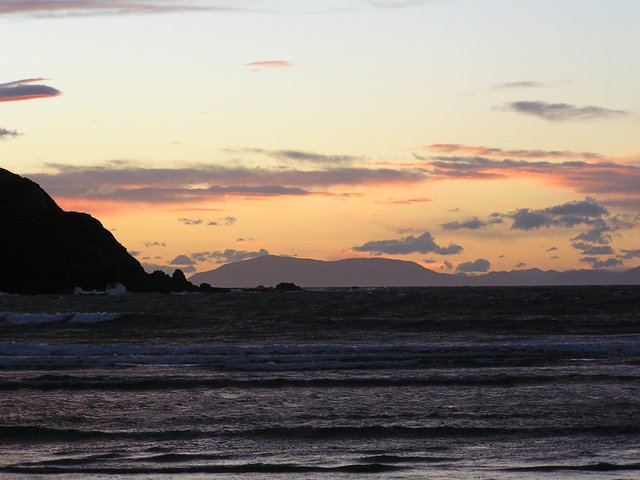
31 Oct--A Halloween Story
There are times when we all feel a little less than alone. It may be standing in your empty lounge in the middle of the day when you get the slightest sensation something else is there, too. Or you may walk into the garage at night and, upon discovering the light bulb blown, your ears feel thick with pressure, and you quickly dart through the door into the warm light. These tiny flirtations with fright are usually laughed off and replaced with a wholesome dose of logic.
Yet there are some moments when the fright is more than a tingle up the spine. There some moments when you cannot chuckle away the thought of running for your life. There are some moments when you are terrified not because of the unknown, but because you are face to face with something wholly unnatural; something, that should not be there.
If you are lucky (and if your mental faculties are relatively stable) your mind will bury it, and it will be a faint pigment staining your otherwise glossy memory: a repression kept from your consciousness for the sake of your sanity. However, it is difficult to repress the same memory twice. Sometimes, the lucky become the haunted.
Ever since he was young, Jamie had experienced what his mother called a healthy fear of the dark. She explained to him once while busily mashing potatoes that "all people have a slight fear of the dark. It's evolutionary. It's what kept our species alive for tens of thousands of years." She continued, adding milk and spices, "The dark is a dangerous place. It's safer not to be alone."
Such advice did little to quell Jamie's anxiety. For years, Jamie felt his throat close up when he so much as walked past a dark room. He wouldn't enter. Not if it was dark, and never if he was alone. He also never turned the light off in the basement before he was upstairs. At his house growing up, there was a switch at the bottom of the stairs, and one at the top. Once when called up for dinner, he accidentally flicked the bottom switch as he walked by. It was an unconscious act, and it happened so quickly that were he to stop and turn it back on he would have to reverse his momentum. He would have to walk back into the darkness. Alone.
He ran like he was running for his life, taking three stairs in a stride. He was on his hands and knees by the time he reached the top. But even then he didn't turn around. He dared not.
Into his adult life, Jamie regularly avoided dark rooms, but by this time the act of doing so was not in the forefront of his mind. It was a reaction as natural as moving your hand off a hot stove or jumping when someone shouts "boo!" He had forgotten why he was afraid. One night, though, when he lived a long way from home, he was reminded.
* * *
Jamie lived in Ireland between 2002 and 2003. A land of ghost stories and haunted castles, Ireland produces a textbook fright, something Jamie found amusing. The sensation of being frightened was as quick and enjoyable as a loud sneeze. You jump, your blood, as if electrified, suddenly surges in all directions. Then it's over. And you look around for someone to laugh with.
Terror, on the other hand--true terror--is the cunning theft of your breath. And when you look around, you are alone. The is nobody. There is only the dark.
In summer, Jamie was helping friends for a week as they replanted a garden in the Abbey outside Limerick. It was hard labour, consisting mainly of clearing invasive weeds and burning them in great piles. The work started early, but ended by 3:00. Everyone would gather at a nearby cabin, share a few beers, and putter away the rest of the day. Many drove back to Limerick, but Jamie and a couple, Aidan and Mary, would stay.
One evening, when everyone had gone, the three of them sat outside the cabin drinking large bottles of Tiger beer, their chairs tilted back to rest against the wall. Aidan and Mary decided to go for a walk, but Jamie stayed behind, content to finish his beer--and perhaps another cigarette.
Some time passed, and Jamie leaned his head back and closed his eyes. But as he was just about to shut them, a figure appeared near the bracken by the far end of the drive. Jamie slowly opened one lid. The sun had almost completely set. In the long shadows of the glen, there stood a tall, black shape. Jamie opened his other eye. The figure was some distance away. It didn't move. It just stood there. Jamie squinted, thinking maybe it was a shadow, or just his mind playing tricks. And just when he thought he'd figured it out, it moved--fast, and directly toward him. In seconds, Jamie could see it more clearly. But what was there to see? It was just black: A cape, a hood, and then nothing. It advanced at an unnatural pace--flew, even--until it was upon Jamie, surrounding him; isolating him; stealing his breath. He sucked in, but he couldn't exhale. And as he gasped, he knew where he'd seen it before: it was in every closet, every dark basement corner, every empty room.
And then it was gone.
Jamie breathed out, panting heavily. His beer pooled at his feet, half of a damp cigarette in the puddle. Aidan and Mary were heading up the driveway. When they asked what happened, Jamie replied simply, "I sneezed."
That night he slept with the light on.
The next morning, as they left with the shovels for work, Jamie looked back at the cabin--at the darkness inside--and picked up his pace. It's never too old to be afraid of the dark.

Happy Halloween.
Yet there are some moments when the fright is more than a tingle up the spine. There some moments when you cannot chuckle away the thought of running for your life. There are some moments when you are terrified not because of the unknown, but because you are face to face with something wholly unnatural; something, that should not be there.
If you are lucky (and if your mental faculties are relatively stable) your mind will bury it, and it will be a faint pigment staining your otherwise glossy memory: a repression kept from your consciousness for the sake of your sanity. However, it is difficult to repress the same memory twice. Sometimes, the lucky become the haunted.
Ever since he was young, Jamie had experienced what his mother called a healthy fear of the dark. She explained to him once while busily mashing potatoes that "all people have a slight fear of the dark. It's evolutionary. It's what kept our species alive for tens of thousands of years." She continued, adding milk and spices, "The dark is a dangerous place. It's safer not to be alone."
Such advice did little to quell Jamie's anxiety. For years, Jamie felt his throat close up when he so much as walked past a dark room. He wouldn't enter. Not if it was dark, and never if he was alone. He also never turned the light off in the basement before he was upstairs. At his house growing up, there was a switch at the bottom of the stairs, and one at the top. Once when called up for dinner, he accidentally flicked the bottom switch as he walked by. It was an unconscious act, and it happened so quickly that were he to stop and turn it back on he would have to reverse his momentum. He would have to walk back into the darkness. Alone.
He ran like he was running for his life, taking three stairs in a stride. He was on his hands and knees by the time he reached the top. But even then he didn't turn around. He dared not.
Into his adult life, Jamie regularly avoided dark rooms, but by this time the act of doing so was not in the forefront of his mind. It was a reaction as natural as moving your hand off a hot stove or jumping when someone shouts "boo!" He had forgotten why he was afraid. One night, though, when he lived a long way from home, he was reminded.
* * *
Jamie lived in Ireland between 2002 and 2003. A land of ghost stories and haunted castles, Ireland produces a textbook fright, something Jamie found amusing. The sensation of being frightened was as quick and enjoyable as a loud sneeze. You jump, your blood, as if electrified, suddenly surges in all directions. Then it's over. And you look around for someone to laugh with.
Terror, on the other hand--true terror--is the cunning theft of your breath. And when you look around, you are alone. The is nobody. There is only the dark.
In summer, Jamie was helping friends for a week as they replanted a garden in the Abbey outside Limerick. It was hard labour, consisting mainly of clearing invasive weeds and burning them in great piles. The work started early, but ended by 3:00. Everyone would gather at a nearby cabin, share a few beers, and putter away the rest of the day. Many drove back to Limerick, but Jamie and a couple, Aidan and Mary, would stay.
One evening, when everyone had gone, the three of them sat outside the cabin drinking large bottles of Tiger beer, their chairs tilted back to rest against the wall. Aidan and Mary decided to go for a walk, but Jamie stayed behind, content to finish his beer--and perhaps another cigarette.
Some time passed, and Jamie leaned his head back and closed his eyes. But as he was just about to shut them, a figure appeared near the bracken by the far end of the drive. Jamie slowly opened one lid. The sun had almost completely set. In the long shadows of the glen, there stood a tall, black shape. Jamie opened his other eye. The figure was some distance away. It didn't move. It just stood there. Jamie squinted, thinking maybe it was a shadow, or just his mind playing tricks. And just when he thought he'd figured it out, it moved--fast, and directly toward him. In seconds, Jamie could see it more clearly. But what was there to see? It was just black: A cape, a hood, and then nothing. It advanced at an unnatural pace--flew, even--until it was upon Jamie, surrounding him; isolating him; stealing his breath. He sucked in, but he couldn't exhale. And as he gasped, he knew where he'd seen it before: it was in every closet, every dark basement corner, every empty room.
And then it was gone.
Jamie breathed out, panting heavily. His beer pooled at his feet, half of a damp cigarette in the puddle. Aidan and Mary were heading up the driveway. When they asked what happened, Jamie replied simply, "I sneezed."
That night he slept with the light on.
The next morning, as they left with the shovels for work, Jamie looked back at the cabin--at the darkness inside--and picked up his pace. It's never too old to be afraid of the dark.
Happy Halloween.
Subscribe to:
Posts (Atom)